



Hail can damage a residential roof by knocking off protective granules, cracking or bruising shingles, denting metal, and breaking materials like tile, slate, or wood. The damage is not always obvious right away, but even smaller hail can shorten a roof’s life and lead to bigger problems over time. This guide explains how hail affects different roofing materials, what signs to look for after a storm, how insurance claims usually work, and what steps to take if you think your roof was hit.
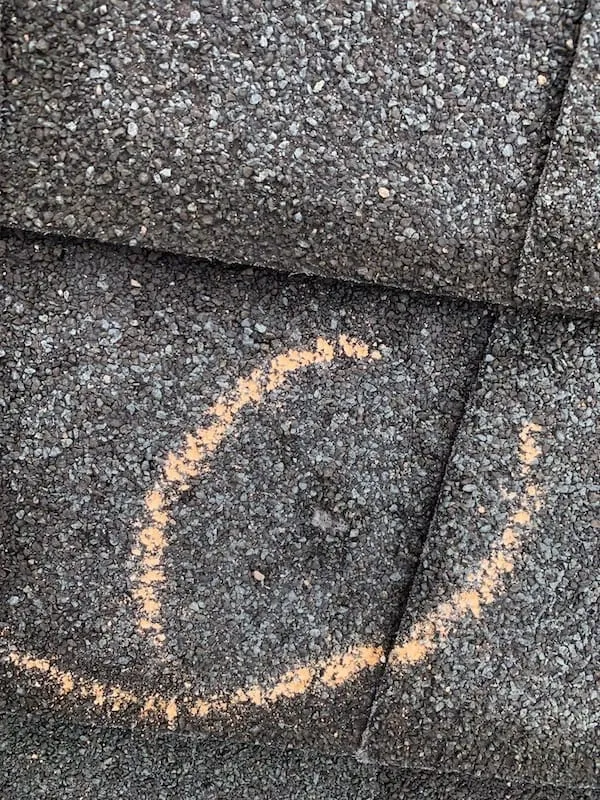
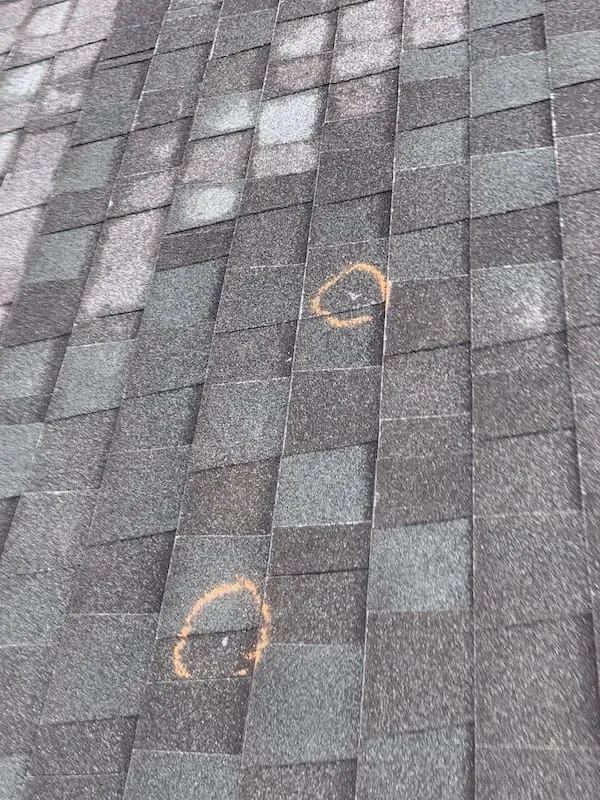
We recently inspected this roof in Bel Air, Maryland. The homeowner called us out for a roof leak, but while inspecting the roof, we noticed signs of hail damage that were not visible from the ground. It turned out that multiple slopes on the hip roof had hail damage. We were able to document the damage and help the homeowner as they filed an insurance claim.
These two photos from the project show how easy hail damage is to miss from the ground. It often takes a close-up view to see how the hail actually affected the shingles.
The Impact Mechanics of Hail on Home Roofs
The Velocity Factor
Speed matters. Even smaller hail can still create enough impact to damage a shingle without leaving obvious signs right away. One of the most common long-term issues is granule loss. A hail impact can loosen or knock off the protective granules on the surface, even if the shingle does not look badly damaged at first. Once that protective layer is reduced, the shingle is more exposed to sunlight and weather, which can speed up aging over time. What looks minor after the storm can lead to faster wear, surface cracking, and a shorter roof life months or even years later.
Invisible vs. Visible Damage
Some hail-related issues are easy to spot. Tile, slate, and even wood can crack, chip, or split in a way you can see right away. Asphalt shingles are trickier. They can have hidden issues that are not visible from the ground. Roofing may look normal until a close-up inspection shows spots of granule loss. That is why a roofing system can “pass” a quick driveway look but still be failing where it matters most.
Impact on Different Roofing Materials
Metal Roofing
Hail can cause dings in a metal roof. These dents are usually round, sometimes subtle, “dimples.” In many cases, that damage is cosmetic. The roofing will still shed water like it should.
The bigger concern is functional damage. If hail chips the paint or protective coating of metal roofs, the metal underneath can be exposed. Once that coating is broken, moisture and salty air can start the rust process. Over time, that can lead to corrosion, pinholes, and weak seams. Hailstorms can also cause damage by bending flashing, opening seams, or denting panels enough to disrupt how water drains.
Asphalt Shingles
Hail can damage asphalt shingles in several ways. The impact can knock off protective granules, which exposes the asphalt to UV and speeds up wear. It can also bruise the shingle by compressing the asphalt and stressing the fiberglass mat underneath, and that weak spot can crack later. In many cases, hail creates tiny fractures you cannot see right away, but heat and cold cycles slowly pull them open. Hail can weaken or break the seal integrity, so your shingles lift more easily in wind and let water push underneath. Hail can be especially destructive to shingle roofs. You may also get chipped edges and cracked corners, especially on older shingles that have gotten stiff. All of this can lead to blow-offs, where the roofing starts losing tabs in the next windy season because the shingles were weakened by the storm.
Wood Shingles
Hail can be hard on wood shingles, especially when the wood is older, dry, or brittle. The impact can split the shingle along the grain, crack the surface, or knock pieces loose. Even a small split matters because it leaves the shingle more vulnerable to moisture and weather exposure. Over time, that damage can lead to faster deterioration, water intrusion, and shingles that are more likely to loosen or fail.
Tile or Slate
Tile and slate are hard materials, but they can still break. Hail can cause chips on corners and edges or create star-shaped fractures. Some tiles look fine until you get close enough to see hairline cracks.
These cracks can spread over time. In colder climates, freeze-thaw cycles make it worse. Water gets into the crack, freezes, expands, and slowly forces the damage wider. A small chip can turn into a broken tile, which creates a direct path for water. In areas where ice dams form, the risk gets even higher. Melted snow can back up behind the ice along the roof edge, and if cracked or broken tiles are already present, that trapped water has an easier path beneath the roof covering and into the underlayment or roof deck.
What Does Roof Damage From Hail Look Like?
Identifying hail effects from a storm is often hard to spot because it doesn’t always leave a hole or knock shingles off. Instead, it creates small “wounds” that weaken the roof’s layers over time. Here are the main signs to look for:
The Visual Checklist
Here are the most common signs on asphalt and composition shingles.
Black spots
These are often areas where hail impact knocked off protective granules and exposed the darker asphalt surface underneath. Once that surface loses granules, it can wear faster from sun exposure and weather over time.
Shiny surfaces
If you see a light or shiny spot, it can mean the asphalt layer has been stripped away. In some cases, you are seeing the fiberglass mat underneath. That is a serious sign because that area has lost its waterproof protection.
Bruises
A bruise is a soft spot caused by impact below the surface. It can feel spongy, like a bruised apple. These bruises can lead to issues over time, even if the shingle looks mostly normal.
Collateral Signs
You can also find clues around the home that point to damage caused by hailstorms.
Dings in gutters and downspouts
If the metal has visible dents, the shingles likely took hits too.
Dented AC fins
Air conditioning fins and outdoor coils dent easily. If they are damaged, hail was hitting with force.
Granule sludge at the bottom of downspouts
After a hailstorm, granules can wash into the gutters and collect near downspouts. A buildup of gritty “sludge” is often a sign of heavy granule loss on the roof.
What Happens When You Ignore Hail Damage?
Ignoring a hail-damaged roof is risky because it can shorten the life of the shingles. The storm may be over, but the damage can keep working in the background. What could have been a normal aging roof can turn into a roof that wears out years early. Hail damage can also affect the roof underlayment beneath the shingles, weakening a key water-shedding layer and increasing the risk of moisture intrusion as the roof continues to age.
Why Acting Early Matters
A professional inspection can catch hail damage that most people will never see at first glance. That gives you options. You can document the storm damage, protect the life of the roof, and make a claim while the evidence is still clear. Even if you do not need a full replacement, catching it early can prevent the roofing from wearing out faster than its expected lifespan. Waiting can also hurt your insurance options. The longer you wait, the harder it is to prove the damage came from that storm.
Is a Hail-Damaged Roof Covered by Insurance?
In many cases, yes. Most homeowner policies cover hail damage. Coverage depends on your policy type, your deductible, and any exclusions. The safest move is to check your declarations page and the policy language.
The Filing Window
Hail claims usually have a time limit. Many policies require you to report the loss within about a year of the storm date. Some are shorter. Some are longer. If you miss the window, the claim can be denied even if the damage is real. The closer you are to the storm date, the easier it is to connect the roof damage to that event.
The Adjuster’s View
Insurance adjusters are looking for proof that the storm caused functional damage. They are not just looking for a “rough-looking roof.” They want clear signs that hail impacted the roofing system.
That is where professional documentation matters, especially for fractured mats. A fractured fiberglass mat can be a hidden failure. The top of the shingle may look normal, but the internal fiberglass fibers can be damaged. That type of damage is hard to prove without a close-up inspection and clear photos.
This is also where a roofer helps. We know what real hail damage looks like and what insurance is looking for. We review the roof with a trained eye, document the findings, and organize the evidence so the homeowner is not trying to guess what matters. That makes the process cleaner and helps prevent hail damage from being dismissed as normal aging.
A solid documentation package often includes:
- Photos of impact on shingles, vents, flashing, and soft metals
- Measured test areas that show consistent hail impacts
- Notes on granule loss, bruising, and cracked surfaces
- Evidence of fractured mats or other internal damage found during hands-on inspection
- Collateral damage photos, like dented gutters, downspouts, or AC fins
If your roof has hidden damage, this step can make or break the claim. Without it, the adjuster may call it normal wear and tear and move on.
What to Do if You Suspect Hail Damage
If you think your roof took hail, the goal is to stay safe and gather the right proof. Most homeowners either ignore it or take risks trying to inspect it themselves. Here is a simple plan that works.
Step 1: Do Not Climb the Roof Yourself
Do not get on the roof after a hailstorm. With loose granules and a scuffed surface, the shingles can become slick. Wet shingles, steep slopes, and damaged edges also raise the fall risk. A roof inspection is not worth an injury.
Step 2: Document Ground-Level Issues
Walk the property and take photos of anything the hail hit. Focus on items that dent easily, because they help prove the storm had force.
- Dents in gutters, downspouts, or metal flashing
- Dings on garage doors, window wraps, or siding corners
- Dented AC fins and outdoor units
- Damage to cars, mailboxes, or exterior lights
These photos may help later if you file an insurance claim.
Step 3: Call for a Professional Inspection
Get a roofer on your roof who deals with these hard-to-find issues on a regular basis. A professional can spot the damage and provide the photos and documentation you need to share with your adjuster.
Our Hail Damage Repair Services
Hail damage is not always obvious. That is why our inspections go beyond surface marks. We check for all issues related to storm and hail damage. You get clear findings, photo documentation, and a straightforward explanation of what matters.
Restoration
Not every roof needs the same solution. Some storms cause damage that can be handled with targeted repairs. Others need a larger scope of work to restore full protection and avoid premature aging. We handle the full range, including:
- Spot repairs and shingle restoration
- Seal strip and wind-resistance issues
- Flashing repair and ventilation component replacements
- Full roof replacement when the damage is widespread
- Certified Roofing Help for Hail Damage Claims and Repairs
When severe hailstorms hit, the next step should be clear answers from a contractor you can trust. RoofPRO holds an A+ rating with the BBB and is certified with leading manufacturers like Tamko and Owens Corning. That matters because it shows proven standards, proper training, and a track record of doing the work the right way. If you suspect hail damage, our team can inspect your commercial or residential roof, document what we find, and help you understand your options.

Author Bio
Tim Taylor – Owner & Founder of RoofPRO
Tim Taylor began roofing in 2003 and founded RoofPRO in 2004 to fight poor workmanship. With over 20 years of hands-on experience, he focuses on leak repair, flashing, and post-storm restoration. He holds CertainTeed ShingleMaster Wizard credentials, HAAG inspection certifications, and OSHA safety training. In 2025, he was named a finalist for the BBB Torch Awards for Ethics in Greater Maryland. He also leads RoofPRO to serve the community through veteran roof relief projects with Habitat for Humanity and Owens Corning. Tim still runs the team on one rule: roof it right the first time.