
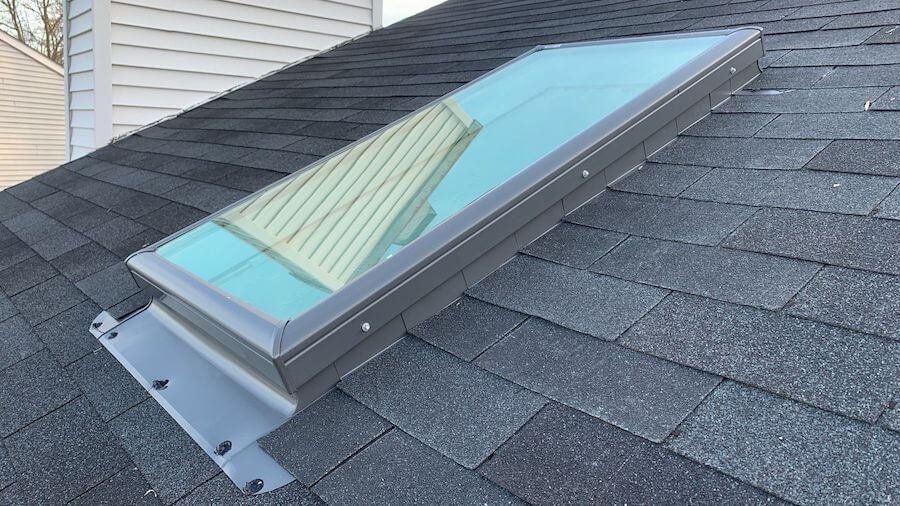

The best skylight depends on what you want from it, how it will be installed, and which features actually matter in your home. After more than 20 years of installing and replacing skylights throughout Maryland, we most often recommend VELUX because of the product quality, flashing systems, warranty support, and long-term reliability we have seen firsthand. This guide breaks down the top brands, skylight styles, mounting options, and features so you can compare them before deciding what makes sense for your home.
What Makes One Skylight Better Than Another?
A better skylight is not just the one with the most features. We look at how well the entire system is designed, how reliably it can be flashed into the roof, and whether the manufacturer will still support the product years later.
If you want a broader overview before comparing products, our complete skylight guide covers skylight types, installation, maintenance, and other homeowner basics.
The things that matter most are:
- A proven flashing system: We prefer skylights with a separate flashing kit rather than older self-flashing designs. In our experience, the flashing system is one of the biggest factors in long-term leak protection.
- Quality glass and seals: Good insulated glass, dependable seals, and solid frame construction matter more than cosmetic upgrades.
- Strong manufacturer support: Replacement parts, warranty coverage, and long-term product availability matter when the skylight eventually needs service.
- Useful operating options: Fixed, venting, solar-powered controls, and factory-installed shades should match how the homeowner will actually use the skylight.
- A design that fits the opening: A quality skylight should work with the roof and existing opening without requiring unnecessary compromises.
A premium skylight can still fail if it is installed poorly, so we judge the product and the installation system together.
Best Skylight Brands to Consider
There are several established skylight manufacturers, but their product lines and long-term support are different. We most often install VELUX, although we regularly encounter FAKRO, Sun-Tek, Marvin, and Wasco skylights when working on existing homes throughout Maryland.
| Brand | Best Fit | Product Range | Warranty & Support | RoofPRO Take |
|---|---|---|---|---|
| VELUX | Residential, commercial, and custom skylight projects | Fixed, venting, roof windows, deck-mounted, curb-mounted, solar, electric, custom, and commercial systems | Qualifying systems include 10-year installation coverage, 20-year glass coverage, 10-year product coverage, and 5-year coverage on shades and controls. | Our preferred brand. We have installed VELUX for more than 20 years and regularly use it for new installations and replacements. |
| FAKRO | Residential homeowners comparing alternatives to VELUX | Fixed, venting, solar, electric, roof windows, and flat-roof options | Warranty coverage is available for skylights, glass, flashing, and qualifying installation systems. | A legitimate alternative, although we encounter and install far more VELUX skylights throughout Maryland. |
| Sun-Tek | Budget-focused and impact-resistant applications | Glass, acrylic, polycarbonate, fixed, curb-mounted, and impact-resistant skylights | Warranty coverage varies by product and glazing system. | A more specialized product mix with impact-resistant and high-performance glazing options. |
| Marvin | Homes with an existing Marvin skylight | Former fixed and venting architectural skylight lines | Support information remains available, but Marvin's residential skylight line has been discontinued. | We still replace Marvin skylights, but it is no longer a current brand we would send a homeowner shopping for. |
| Wasco | Commercial, custom, structural, and dome skylight projects | Commercial unit skylights, custom systems, structural glazing, and architectural daylighting | Warranty coverage depends on the specific commercial system. | Important for commercial and unusual openings. Wasco is now part of VELUX Commercial. |
1) VELUX Skylights
VELUX is the brand we install and recommend most often. Many Maryland homes already have VELUX skylights, so replacing an older unit with another VELUX product is often the most practical option.
More importantly, our recommendation comes from experience. We have installed VELUX products for more than 20 years and have had very few product-related problems. Their residential line includes fixed and venting skylights, deck-mounted and curb-mounted options, solar controls, shades, and dedicated flashing systems.
2) Fakro Skylights
FAKRO is one of the more established alternatives to VELUX. Its current residential lineup includes fixed, manual venting, electric, and solar venting skylights in both deck-mounted and curb-mounted configurations.
We have replaced FAKRO skylights with VELUX on Maryland homes, but FAKRO remains a legitimate manufacturer homeowners may encounter when comparing products.
3) Sun-Tek Skylights

Sun-Tek offers a somewhat different product range, including insulated glass, polycarbonate, curb-mounted, fixed, and impact-resistant skylights. The company has also developed products specifically for high-wind and severe-weather applications.
They are worth knowing about, particularly if you are comparing replacement options or already have a Sun-Tek skylight installed.
4) Marvin Skylights
Marvin produced premium residential skylights, including its Awaken line, but the company now lists the Awaken Skylight Window as discontinued.
We still encounter Marvin skylights on existing homes and have replaced them with VELUX products. If you already have one, the important question is usually whether the existing opening can accept a standard replacement or requires a different size or mounting approach.
5) Wasco Skylights

Wasco has been in the skylight industry for decades, but the company was acquired by VELUX in 2018 as VELUX expanded its commercial daylighting business.
Homeowners may still find the Wasco name on older skylights, while many of its products and expertise now fall under the broader VELUX commercial operation. We have replaced older Wasco units as well, particularly when an existing skylight has reached the end of its service life.
Which Skylight Style Is Best?
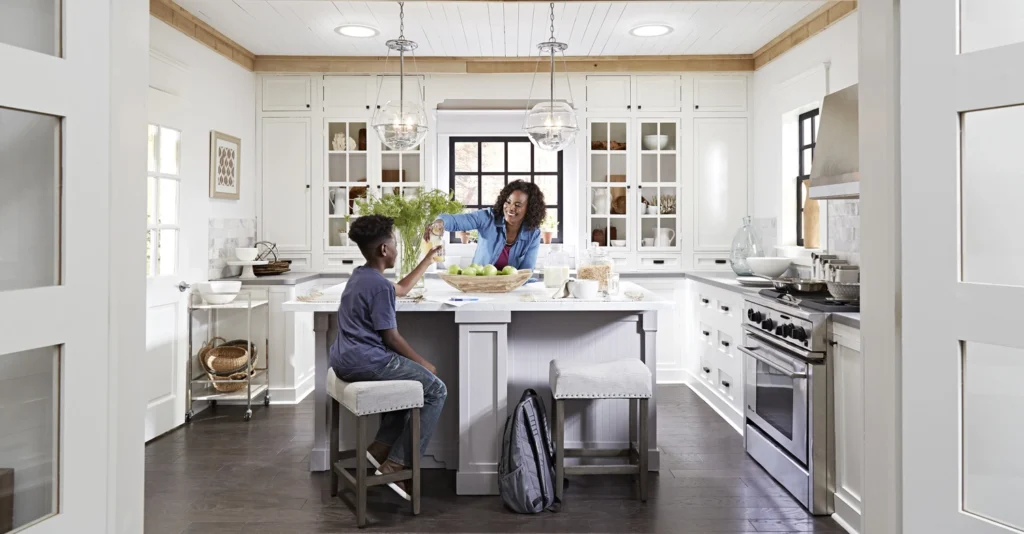
The best skylight style depends on what you want it to do. If the goal is simply to bring in more natural light, a fixed skylight is usually the simplest choice. Venting skylights add airflow, while roof windows are designed more like an operable window and are usually installed where the homeowner can reach them.
Fixed Skylight
Fixed skylights do not open, which makes them the simplest and most common style we install. There are fewer moving parts, and they work well in living rooms, hallways, stairwells, and other spaces where ventilation is not the main goal.
For most homeowners who simply want more daylight, a fixed VELUX skylight is usually where we start.
Venting Skylights
Venting skylights open to let heat and fresh air move through the room. They can make sense in bathrooms, kitchens, bedrooms, and other areas where additional ventilation is useful.
We generally recommend them when the skylight is reasonably accessible for future service. Even with solar or electric operation, a skylight positioned very high above the floor can be harder to maintain if something eventually needs attention.
Roof Windows
Roof windows are designed to be installed within reach and operated more like a traditional window. They are most useful in finished attic spaces, lofts, or upper-level rooms where the roofline comes down close enough for someone to reach the unit.
Unlike a typical overhead skylight, a roof window is meant to be interacted with regularly, so placement matters much more.
Deck-Mounted vs. Curb-Mounted Skylights
Deck-mounted and curb-mounted skylights describe how the skylight attaches to the roof, not whether it is fixed or venting.
Deck-Mounted Skylights
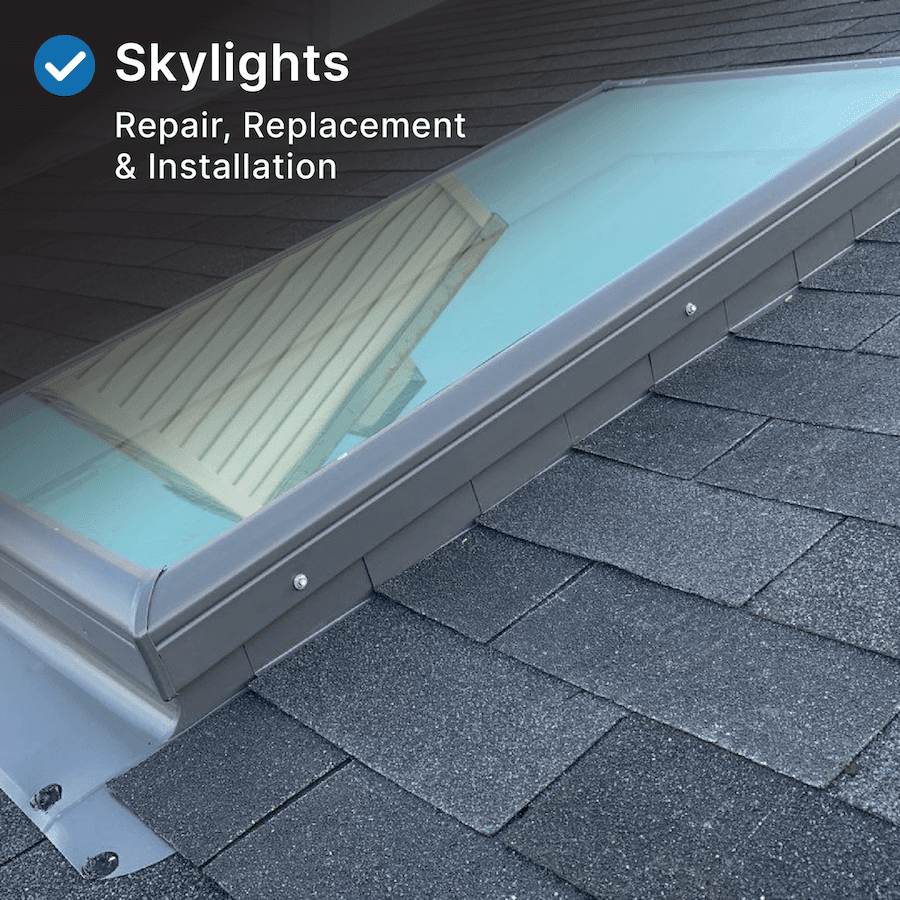
We use deck-mounted skylights most often on residential sloped roofs. The skylight attaches directly to the roof deck and uses a separate flashing kit designed for the roofing material, including asphalt shingles, slate, and other common systems.
For most sloped residential roofs, this is our preferred setup because the flashing system is designed specifically around the skylight.
Curb-Mounted Skylights
Curb-mounted skylights sit on top of a raised curb built above the roof surface. We use them most often on flat roofs because the added height allows the roofing membrane to be properly flashed up the sides of the curb.
They can also make sense on a sloped roof when an existing skylight opening has an unusual size that cannot be matched with a standard deck-mounted unit. In those cases, a curb can sometimes be built to accommodate the replacement.
Which Skylight Features Are Worth Paying For?
Not every upgrade adds much value, but a few features can make a skylight much easier to live with. For venting skylights, we usually recommend paying for convenience rather than choosing the cheapest operating system.
Manual, Electric, or Solar Operation
Manual venting skylights work, but they can be clunky, especially when the skylight is above normal reach. We usually recommend solar-powered operation because it avoids running electrical wiring and makes opening and closing the skylight much easier.
VELUX solar models use a small solar panel to charge the battery that operates the skylight. Electric models offer similar convenience but require a power connection.
Rain Sensors and Automatic Closing
If you are choosing a venting skylight, a rain sensor is one feature we think is worth having. VELUX solar and electric venting skylights include a sensor that automatically closes the unit when rain is detected.
It removes one of the biggest concerns homeowners have about leaving a skylight open and then forgetting about it when the weather changes.
Skylight Shades and Light Control
Shades are much more useful than many homeowners expect, especially in bedrooms or rooms that receive strong direct sunlight. Current VELUX skylight systems include a factory-installed white, room-darkening, solar-powered shade with a remote. Other shade colors and light-filtering options are also available.
We prefer the solar-powered shades over manual versions for the same reason we prefer solar operation on venting skylights. They are simply easier to use when the skylight is overhead.
Glass and Energy-Efficient Options
Glass quality matters more than adding unnecessary gadgets. VELUX residential skylights use laminated insulated glass with a Low-E coating and argon gas between the panes to help control heat transfer while still bringing natural light into the home.
For most homeowners, we would prioritize good glass, a proper flashing system, solar controls, and useful light control before spending money on features they are unlikely to use.
VELUX vs. FAKRO: What’s the Difference?
VELUX and FAKRO both make fixed and venting skylights with deck-mounted, curb-mounted, manual, electric, and solar options. FAKRO also backs qualifying residential skylights installed with its flashing kits with a 10-year leak-proof installation warranty.
The bigger difference for us is experience and product support. We have installed VELUX skylights for more than 20 years, and they are already common on Maryland homes. When we replace a FAKRO or another brand, we often go back with VELUX because we trust the product, the separate flashing systems, and the availability of replacement options.
VELUX also provides a 10-year installation warranty when qualifying deck- or curb-mounted skylights are installed with VELUX flashing, plus 20 years on glass seal failure, 10 years on the product, and 5 years on shades and controls.
For RoofPRO, both are legitimate skylight manufacturers, but VELUX is the brand we prefer and install most often based on our long-term experience with the product.
What Skylight Do We Recommend Most Often?
For most residential projects, we recommend a VELUX fixed, deck-mounted skylight. The D06 and C08 are two of the sizes we encounter most often on Maryland homes because they work well with common residential framing and existing skylight openings. VELUX specifically designs the D06 to fit between roof trusses, which helps explain why that size shows up so often.
When the homeowner wants ventilation, we usually move to a VELUX solar-powered Fresh Air skylight in the appropriate size. It gives them the convenience of powered operation without running electrical wiring to the roof.
On flat roofs, we typically use a curb-mounted model instead. We also occasionally order custom-sized skylights when an older opening cannot be matched with one of VELUX’s standard sizes.
What Should You Look for When Replacing an Existing Skylight?
Replacing an existing skylight is usually simpler than adding one for the first time, but the new unit still needs to work with the existing opening and mounting setup. If the home already has a standard VELUX opening, we can often replace it with a current VELUX model in the same size.
Older Marvin, Wasco, FAKRO, and other skylights can also be replaced with VELUX. The biggest question is whether the existing opening matches a standard size. If it does not, we may need to use a curb-mounted skylight or order a custom-sized unit.
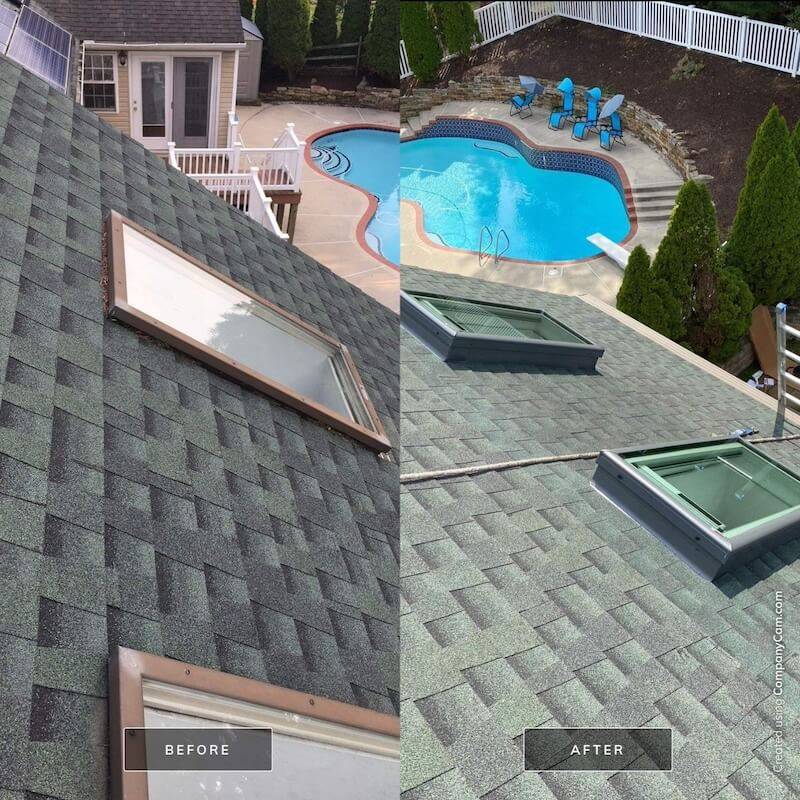
If the roof is already being replaced, that is also a good time to replace an older skylight. The surrounding roofing is already removed, which makes it easier to install the new flashing system correctly and usually reduces the added labor.
How Much Does a Quality Skylight Cost?
For a standard replacement, most skylight projects we install fall between $900 and $1,500 per skylight, including the skylight, roofing materials, and labor.
The price can increase when the project requires a new opening, interior drywall work, a custom-sized unit, or more complicated access. If the skylight is being replaced during a full roof replacement, the cost is often a little lower because the crew is already there and some of the roofing work is already underway.
For homeowners comparing products, we would focus less on the cheapest skylight and more on the quality of the unit, flashing system, and installation. A lower-cost skylight is not a good value if it creates leak problems later.
The Best Skylight Can Still Fail If It Is Installed Wrong
A high-quality skylight will not protect the home if the flashing around it is installed incorrectly. Most of the skylight leaks we find are caused by installation mistakes, not the skylight itself.
Common problems include nails driven through the wrong part of the flashing, poorly integrated roofing materials, or installers relying on caulk instead of a proper flashing system. We also see more trouble with older self-flashing skylights where the frame and flashing are built together. Working with skilled skylight installation professionals helps make sure the flashing, waterproofing, and roofing materials are integrated correctly from the start.
That is one reason we prefer skylights with a separate manufacturer-designed flashing kit. It gives us a better way to integrate the skylight into the roof and manage water around the opening. Because installation matters just as much as the skylight itself, it is also worth reviewing a contractor’s installation and workmanship warranties before choosing who will do the work.
How to Choose the Best Skylight for Your Home
The best skylight is the one that fits how you plan to use it, not necessarily the one with the most features. Think about how the room is used too. Bathrooms and kitchens can benefit more from a venting skylight because of moisture and heat, while living rooms, hallways, and other spaces often only need a fixed skylight for natural light. In bedrooms, shades and light control may matter more than ventilation.
- Choose a fixed skylight if your main goal is natural light and you do not need extra ventilation.
- Choose a venting skylight if airflow is important, especially in bathrooms, kitchens, or bedrooms.
- Choose solar operation if the skylight will be overhead or difficult to reach. It is much more convenient than manual controls.
- Use a deck-mounted skylight on most sloped residential roofs.
- Use a curb-mounted skylight on flat roofs or when an unusual existing opening requires it.
- Stick with an established manufacturer that offers dedicated flashing systems, replacement parts, and long-term warranty support.
For most Maryland homes, we typically end up recommending a VELUX fixed or solar-powered venting skylight, depending on whether the homeowner wants ventilation in addition to natural light.
Frequently Asked Questions
Most skylights last around 20 years, although a well-installed unit can sometimes last longer. VELUX notes that some of its skylights are still working after 30 years, but once a skylight gets into the 20-year range, seals, frames, and flashing become more likely to need attention.
Yes. A new skylight can be added where one did not previously exist, but the project is more involved than a simple replacement. The roof opening, framing, interior shaft, drywall, and finish work all have to be planned together.
We look at the roof structure and where the homeowner wants the light inside before deciding whether the location makes sense.
Sometimes. VELUX does offer glass replacement for certain models when the pane is cracked or has condensation between the glass.
For an older skylight, though, replacing the entire unit often makes more sense. New glass does not fix an aging frame, worn seals, or an outdated flashing system.
They can if the skylight has poor glass, receives strong direct sun, or does not have adequate light control. Modern insulated Low-E glass and skylight shades help reduce unwanted heat while still allowing natural light into the room.
Skylights do not require much routine maintenance, but they should still be checked occasionally. Keep debris away from the exterior, watch for condensation or moisture around the frame, and make sure venting skylights and shades continue to operate properly.
We also recommend having the flashing inspected whenever the surrounding roof is being evaluated. Our skylight maintenance tips cover what homeowners should watch for between professional inspections.
Yes, depending on the problem. A flashing issue, damaged component, or isolated installation problem may be repairable.
If the skylight is older, the seals have failed, the frame is deteriorating, or several parts are beginning to fail, replacement usually makes more sense than continuing to repair it.
If the skylight is approaching 20 years old and the roof is already being replaced, that is usually the best time to replace it. The surrounding roofing materials are already being removed, which makes the work easier and often less expensive than returning later for a separate skylight replacement. VELUX also recommends considering replacement during reroofing, particularly for older units.
Get Help Installing the Right Skylight for Your Home
We offer free skylight estimates throughout Maryland and can help you choose the right style, mounting method, and features for your home. With more than 20 years in business, an A+ BBB rating, and extensive experience installing and replacing VELUX skylights, RoofPRO can help you make the right choice and install it correctly. Contact us for a personalized recommendation!