


The shingles on your roof get all the attention, but what sits underneath them does just as much to keep water out of your home. Roof underlayment is the hidden protective layer installed directly on the plywood before the first shingle goes down. It acts as a backup barrier when shingles crack, blow off, or let water through during heavy storms. In Maryland, where ice dams form in winter and summer storms drive rain sideways, the right protective layer can mean the difference between a roof that holds up and one that leaks within a few years.
Most homeowners never think about roof underlayment until they need a roof replacement. By then, your contractor is making decisions about materials you might not fully understand. This guide walks you through the three main roofing underlayment types, explains where each one works best, and points out the installation mistakes that cause problems later. When you know what goes under your shingles, you can make better decisions about your roof repair or replacement project.
What Roof Underlayment Is And Why It Matters
Roof underlayment is a water-resistant or waterproof layer that covers your plywood deck. It sits between the wooden decking and your shingles, creating a second line of defense against moisture. If a shingle cracks, a nail pops up, or wind tears part of your material during a storm, underlayment keeps water from soaking into the wood and dripping into your attic.
Roof underlayment also protects your home during the construction process. When your old roofing material comes off and the new one goes on, your house is exposed to the weather. A sudden rainstorm during a roof replacement can soak your decking and cause damage if there is no underlayment in place. Good roof underlayment materials give your roofers time to finish the job without racing against the forecast.
Even high-quality roofing underlayment has limits. It is an important backup layer, but it is not a replacement for proper flashing, sound roof design, or attic ventilation that works the way it should. If flashing details are weak around chimneys, valleys, skylights, or pipe penetrations, water can still get where it does not belong. If roof ventilation is poor, moisture and heat can still create problems inside the roofing system over time. Good underlayment matters, but it performs best when the rest of the roof system is designed and installed correctly too.
This is also why underlayment is typically replaced during a full roof replacement rather than left in place. Because it sits directly beneath the shingle and above the roof deck, it cannot be properly inspected, renewed, or upgraded without removing the roofing material above it. If the top layer is being replaced, that is usually the right time to install a new underlayment system that fits the current roof design and protection needs.
The Three Main Underlayment Types At A Glance
There are three main categories of roof underlayment used in residential roofing. Each one is built differently, performs differently, and costs a different amount. Understanding the strengths and limits of each type helps you see why your contractor recommends one over another. The sections below break down what each underlayment material is made of, where it works best, and what tradeoffs you accept when you choose it.
The right underlayment is not chosen by price alone. It also needs to match the roofing system being installed, the angle of the roof, local code requirements, and the manufacturer specifications tied to the shingles or other finished roofing material. If the wrong product is used, or if it is installed in a way that does not follow those requirements, it can create problems with performance and may even affect warranty coverage later. That is one reason homeowners should not look at underlayment as a generic layer. It needs to work as part of the full roofing system, not just sit underneath it.
Synthetic Underlayment
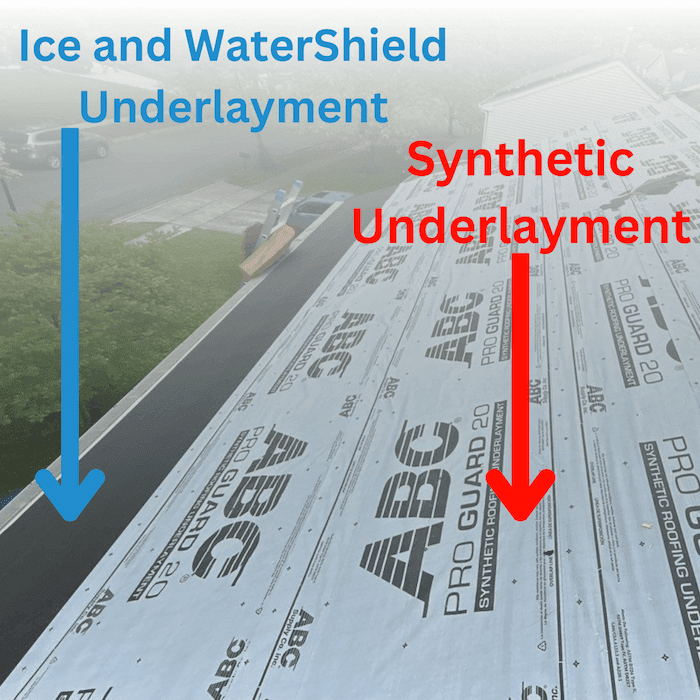
Made from woven or spun polypropylene or polyethylene, these products create a lightweight sheet that resists tearing and lies flat on your roof deck. It replaced felt underlayment as the standard choice for most residential roof replacement projects over the past two decades. They also come in rolls that are easier to handle than heavy felt, and they stay stable in sunlight and weather for weeks or even months if installation gets delayed.
Pros and Cons
The biggest advantages are its durability and ease of use. It does not tear as easily as felt when workers walk on it, and it does not wrinkle or buckle under shingles. It can be left exposed to the weather longer without breaking down, which matters if your project runs into delays. It also sheds water better than felt, so it does not absorb moisture and get heavy or lose its shape.
That said, longer exposure time should not be confused with permanent protection. When a roof is dried in, it means the home has temporary weather protection while the project is still in progress. It does not mean the underlayment is meant to serve as the finished roof surface for an extended period. Every product has limits to the time it can be exposed, and once those limits are pushed too far, sunlight, weather, and foot traffic can start reducing the material’s effectiveness. Homeowners should understand that dried in is an important stage of the job, but it is still only one step in a completed roofing system.
The main downside is cost. These products cost more than asphalt felt, which adds to your total roof replacement cost in Maryland. Some synthetic products are also slippery when wet, creating safety concerns for workers on steep roofs. Contractors need to plan their footing and use extra caution during installation, especially in damp conditions.
Asphalt-Saturated Felt Underlayment
Asphalt-saturated felt, often called tar paper, is the traditional roofing underlayment material that has been used in roofing for decades. It consists of a base mat, either organic or fiberglass, that is saturated with asphalt to make it water-resistant. Asphalt underlayment comes in different weights, with 30-pound felt being heavier and more durable than 15-pound felt. It has a rougher texture than a synthetic underlayment option and a distinctive smell from the asphalt.
The difference between 15-pound and 30-pound felt roof underlayments come down to thickness, durability, and how well the material holds up during installation. Thirty-pound felt is heavier, tougher, and less likely to tear or wrinkle under normal jobsite conditions, which makes it the better choice when a contractor is still using felt underlayment on a residential roofing project. Fifteen-pound felt is lighter and less expensive, but it is also easier to damage and more likely to react poorly to moisture and weather conditions. For homeowners, that means the lower-cost option may not offer the same level of jobsite durability or long-term reliability.
Pros and Cons
Felt underlayment costs less than synthetic, making it an option for homeowners on a tight budget. It also provides good traction for workers, which reduces the risk of slipping on steep roofs. Felt is breathable, allowing some moisture vapor to escape from the deck, which can be helpful in certain climates and roof designs.
The disadvantages are significant. It tears more easily than other products, especially when it gets wet. It absorbs moisture over time, which can cause it to wrinkle and lose its shape under shingles. Felt underlayment also has a limited time for which it can remain exposed. If it sits uncovered for too long, it breaks down in sunlight and loses its protective qualities. Wrinkles in felt can telegraph through shingles, creating visible bumps on your finished roof.
Rubberized Asphalt Self-Adhered Underlayment
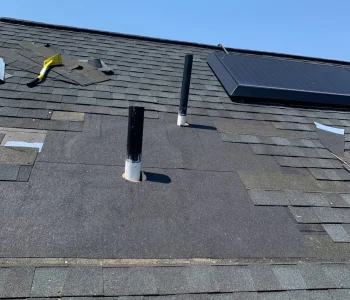
Rubberized asphalt self-adhering products, commonly called peel-and-stick or ice and water barrier, is a fully waterproof membrane that sticks directly to your plywood deck. It has a rubberized asphalt backing protected by a release liner. You peel off the liner and press the membrane down, creating a seal that prevents water from getting through, even around nail holes. Self-adhering membranes are thicker and heavier than synthetic or felt.
Pros and Cons
The main advantage is its waterproof performance. It seals around fasteners, creating a watertight barrier that stops leaks in areas where water tends to pool or back up under shingles. It is the most effective protection against ice dams, which form along eaves in winter and force water under roofing materials. Self-adhered products also resist wind-driven rain better than other types.
The downsides are cost and installation complexity. These products are the most expensive option per square foot, which makes it impractical for full-roof coverage on most projects. It requires more labor to install correctly, and it is temperature-sensitive. If it is too cold, the adhesive does not stick well. If it is too hot, the membrane becomes difficult to handle and can stretch out of shape. Removing it later, if repairs are needed, is basically impossible.
Best for
Self-adhered underlayment, or peel-and-stick, works best as targeted protection in the most vulnerable areas, not as a blanket layer across the entire roof. It is most useful in valleys, along eaves where ice dams form, around chimneys and skylights, and on low-sloped sections where water drains more slowly. In many areas, building codes require an ice-and-water barrier in these locations, and it is one of the smartest upgrades for long-term roof performance. On metal roofs, this layer often needs to be a high-temperature product so it can hold up better beneath panels that may trap more heat than a standard shingle roof.
Where Each Type Is Used On A Real Roof
Full-Roof Coverage Choices
Standard underlayment is the layer that covers the roof deck across the entire field of the roof. It runs from the lower edges up toward the ridge, creating continuous coverage over most of the plywood. That full-surface layer helps manage moisture that gets under a shingle and gives the roof system a consistent water-shedding barrier from end to end.
Targeted Protection Strategy
Most roofs use a combination of materials rather than one type everywhere. The common approach is to install self-adhered rubberized asphalt products in vulnerable areas and cover the rest of the roof with normal underlayment. This strategy balances cost with performance, putting the most protection where it matters most. The peel-and-stick goes along the eaves, in valleys, around penetrations like vents and chimneys, and on low-sloped sections. The rest of the roof gets the normal water barrier for reliable coverage without the expense of self-adhered products everywhere.
Roof Geometry Considerations
Your roof pitch affects which products work best. Steep roofs shed water quickly, so they can often perform well with synthetic or felt as the primary underlayment and targeted peel-and-stick in key areas. Low-sloped roofs, where water moves more slowly and can pool, need more aggressive protection. Building codes typically require self-adhering products on sections with an angle below a certain threshold. If your project has a mix of slopes, your roofers will adjust the underlayment strategy to match the geometry. Understanding how roof angles work helps you see why different areas of your roof need different protection levels.
Metal Roofs Need a Different Underlayment Strategy
Metal roofing should not be treated exactly the same as asphalt shingle systems when underlayment is being selected. Panels can create higher temperatures at the roof surface, which means the layer below them needs to be chosen with more care. In many cases, contractors use synthetic underlayment across the main field of the roof and then install a high-temperature self-adhered membrane in more vulnerable areas like eaves, valleys, penetrations, and lower-sloped sections. The right setup depends on the panel type, the slope of the roof, local code requirements, and the manufacturer instructions for the specific metal system being installed.
Metal roofs can also bring added concerns that homeowners do not always think about during a roof replacement. Depending on the roof assembly, the underlayment may need to help manage condensation beneath the panels, and some systems use a slip sheet or separation layer so the metal does not bond to or wear against the material below it. That is one reason a metal roof should never be installed with a one-size-fits-all approach. The underlayment needs to match the panel system and the roof design just as much as it needs to resist water.
Valleys and Flashing Integration
Valleys are one of the most critical areas for underlayment because they channel water from two slopes into a single path. Ice and water shield is the standard choice in valleys because it creates a watertight seal and prevents leaks even if pieces shift or crack. The same principle applies around chimneys, skylights, and other penetrations where flashing is used. Self-adhered products stick to the flashing and the roof deck, creating a continuous barrier that stops water from sneaking through gaps. Proper integration between underlayment and flashing is just as important as the materials themselves.
Common Mistakes Made With These Roofing Materials
Skipping Peel-And-Stick In Vulnerable Areas
One of the most damaging mistakes is leaving out self-adhering products where it is needed most. Homeowners trying to save money sometimes skip the peel-and-stick along eaves or in valleys, relying only on basic underlayment. This decision catches up with you when ice dams form in winter or hail damage and wind-driven rain pushes water under your shingles during a storm. The areas that need the most protection are the ones that fail first without it. Building codes require ice and water barrier underlayment in certain locations for a reason, and ignoring those requirements leads to leaks and expensive repairs down the road.
Wrinkled Felt Under Shingles
Felt underlayment that absorbs moisture or gets installed improperly can wrinkle and buckle under your shingles. Those wrinkles create visible bumps on your finished roof, and they can trap water in low spots where it sits and works its way through over time. Wrinkled felt is usually the result of poor installation practices, like not fastening it properly or leaving it exposed to rain. Once the roofing is complete, fixing wrinkled underlayment means tearing off the top layer of material and starting over. Using synthetic underlayment instead of felt avoids this problem because it lies flat and does not absorb moisture.
Using Low-Traction Synthetic Without Safety Planning
Some products have a smooth surface that becomes slippery when wet. Contractors who do not plan for this create dangerous working conditions, especially on steep roofs. Workers can lose their footing and fall, leading to serious injuries. The solution is either choosing a product with better traction or implementing extra safety measures during installation. Homeowners should ask their contractor how they handle safety on steep roofs, because a cheap product that saves money up front is not worth the risk of a worker getting hurt on your property. This is one reason many homeowners choose professional roofers over DIY approaches.
Improper Fastening That Creates Blow-Offs
Underlayment needs to be fastened to the plywood deck with the right number of fasteners in the right pattern. Skipping fasteners or spacing them too far apart allows wind to get under the lift, which can lead to blow-offs during high winds. This is especially common with felt underlayment, which is more prone to tearing when it flaps in the wind. Proper overlap between sheets and adequate fastening along seams are critical to keeping your material in place during storms.
Bad Flashing Details Blamed On Underlayment
When you get a leak around a chimney, skylight, or valley, homeowners sometimes assume the metal or shingle roofing failed. In many cases, the real problem is poor flashing installation. Underlayment can only do so much if the flashing is not integrated correctly or if the flashing itself is damaged or improperly sealed. A leak around a penetration does not always mean you need a different base product. It often means the flashing details need to be redone properly. A thorough roof inspection can identify whether the issue is underlayment, flashing, or both, so you fix the right problem instead of wasting money on unnecessary work.
Questions to Ask About Underlayment Before Roof Replacement
Before agreeing to a roof replacement, homeowners should ask a few direct questions about the underlayment that will be used. Ask what product is planned for the main field of the roof, where peel-and-stick protection will be installed, and whether the system meets both code requirements and manufacturer specifications. It is also smart to ask how long the chosen product can stay exposed if weather delays the project and how the underlayment will tie in with flashing around valleys, chimneys, skylights, and vents.
These questions help you compare proposals more clearly and spot weak planning before work starts. A strong contractor should be able to explain why a certain underlayment was chosen, where extra protection is needed, and how the system is being built to handle real weather conditions. If the answers are vague, that is usually a sign to slow down and ask more questions before moving forward.
Schedule A Roof Inspection With RoofPRO
If you are not sure what underlayment is on your home or whether it is still doing its job, we can assess it during a roof inspection. We look at your roof deck, check for signs of a leaky roof, and evaluate whether your underlayment is protecting your home the way it should. If you need a complete reroof, we walk you through the options that make sense for your roof geometry, your budget, and the weather conditions in Maryland.
RoofPRO has handled projects across Maryland for over 20 years. We know which materials hold up in our climate and where targeted protection matters most. Whether you need a large installation or repairs that requires new underlayment in a specific area, we explain your options clearly and get the work done right the first time. Understanding the complete parts of a roof system helps you make informed decisions about your investment.
Get a free estimate by contacting us today. We will schedule a time to inspect your roof, answer your questions about roofing materials, and provide a clear recommendation based on what you need.