


Snow can sit quietly on a roof and still cause real damage. The biggest problems usually come from four things working together: heavy weight on the structure, melting snow that refreezes into ice, drainage that gets blocked by ice, and extra moisture building up in the attic. This guide breaks down what snow does to your roof, the warning signs to take seriously, and the steps that help prevent the same winter issues from coming back year after year.
It also helps to remember that a roof is more than shingles. It is a full system made up of the roof covering, underlayment, flashing, decking, ventilation, gutters and downspouts, and the framing underneath. When temperatures swing, snow can melt and move into places it should never reach. If water slips past the surface, it may soak the roof deck or insulation and stay hidden for a while. That is why winter problems often show up later as soft spots, warped wood, moldy smells, or ceiling stains, even when the roof looked fine during the storm.
Heavy Snow Load
Snow load is simply the weight of snow sitting on your roof. A light, fluffy snowfall usually is not a big deal on its own. The problem is wet, heavy snow and ice. That weight adds up fast, especially when it piles into one area from wind drifting or sliding snow that collects in a valley or near an edge. When the roof carries more weight than it is built to handle, you can start seeing stress show up as creaks, cracked drywall, doors that suddenly stick, or a roofline that looks slightly uneven.
The real concern is when that heavy load lingers for days. It can strain trusses, rafters, and other structural members over time. Drifts make it worse because the weight is not spread evenly. In extreme situations, that concentrated load can lead to serious structural damage, and in rare cases, a partial collapse. If the snow is deep, dense, and not melting off, it is worth treating as a safety issue, not just a roof maintenance issue.
Drifts Create Uneven Stress
Wind can stack snow into deep drifts, even when the total snowfall does not seem that serious. Those drifts often form in the same trouble spots every winter. You will usually see them behind chimneys, in roof valleys, around skylights and dormers, where a lower roof meets a taller wall, and on low-slope roofs behind parapet walls. The roof can look mostly clear in one area while another section is buried.
Drifts matter because the weight is not spread evenly. One part of the roof can end up carrying far more load than the rest, which raises the risk of structural stress. That uneven pressure also speeds up wear in the areas that already work the hardest, including shingles, flashing, and fasteners. Over time, those weak points are more likely to loosen, shift, or leak, especially when the drift starts to melt and refreeze.
Warning Signs Of A Structural Issue
Winter roof issues can turn serious fast, so it helps to know what is normal and what is a red flag. If you notice new ceiling cracks, doors that start sticking after a storm, sagging drywall, loud creaks in the attic, or a roofline that looks dipped from the street, bring in a roofing professional quickly. Skip the icy roof climb, and do not walk around in an attic if the ceiling or framing looks like it is bowing. If you think the roof is overloaded, treat it like a safety problem first, not a DIY project.
Ice Dams That Dislodge the Roof
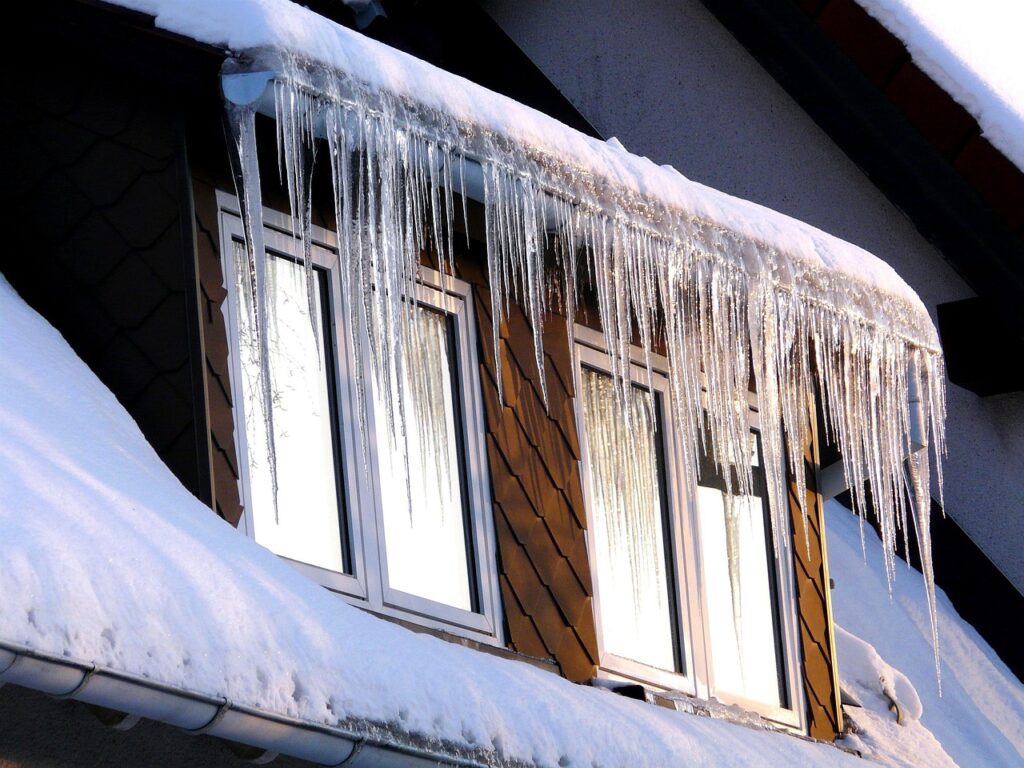
Shingles are built to shed water downward, but an ice dam forces water to back up and move sideways. That is why leaks often show up near eaves, valleys, chimneys, skylights, and roof-to-wall transitions.
Once water gets under the roofing, it can soak the underlayment or membrane and work its way into the attic before you ever see a drip. When you see brown stains near exterior walls, peeling paint at the top of walls, damp insulation near the eaves, drips around windows, or musty smells near the roof perimeter, you could have a leak from ice damage.
How We Fix Ice Build-Up
We recently went out to a condo where a tenant had water leaking in around a window because of an ice dam. There was so much built-up ice that it was starting to pull the gutter away from the eave. As that happened, water began working its way behind the shingles and flashing and into the home.
We could not remove all of the ice by force because that would have risked damaging the roof. Instead, we applied roof melt pellets to help open drainage channels through the ice. That lets melted snow move off the roof instead of backing up and refreezing on the roofing material.
The goal was not to remove every bit of ice. The goal was to create a path for water to drain off the roof safely and reduce the chance of more water getting inside.
Gutters and Drainage Problems
Gutters and drainage also play a bigger role than most homeowners realize. When gutters and downspouts freeze, meltwater has nowhere to go. It can back up under the first rows of roofing near the edge and create leaks during thaws. Common clues include gutters sagging from ice weight, ice building up on fascia and soffits, water running behind the gutter, or downspouts that are frozen solid. A helpful tip is timing. If leaks happen during a warm-up but you do not see the same problem during a regular rain, drainage backup is high on the list.
Attic Condensation
Finally, not all winter moisture comes from outside. Attic condensation can look like a roof leak, but the source is often indoor air. Warm, moist air escapes into the attic through small gaps, freezes on cold surfaces, and then melts later when temperatures rise. Look for frost on nail tips, damp roof sheathing in patches, wet insulation that is not tied to a clear roof opening, mold on wood, or bathroom and kitchen fans dumping moist air into the attic. Condensation is usually tied to air leaks, weak insulation, or ventilation that is out of balance. If it keeps cycling, it can stain drywall, rot wood, and weaken the roof deck over time. A properly balanced roof ventilation system allows moist attic air to escape and fresh air to circulate, helping reduce condensation that can otherwise damage the roof deck, insulation, and surrounding wood over time.
Snow’s Impact on Different Roofing Materials
Snow does not affect every roof the same way. Each material handles weight, melting, and refreezing a little differently, and the trouble spots are not always the same. Some roofs shed snow quickly, which helps reduce weight but can create sliding hazards. Others hold snow longer, which can lead to more ice dams and moisture issues. The breakdown below explains what is typical for each roof type, where problems usually start, and what to check after a storm.
Metal
Metal roofs usually shed snow quickly, so heavy buildup does not sit as long as it can on other materials. That helps reduce roof weight, but it can also send snow sliding off in big sheets, which can bend gutters, crush plants, or drop onto entry paths. This is where snow guards become a crucial component to have installed.
The weak points are rarely the panels themselves. They are the seams, fasteners, and flashing details. When snow melts and refreezes, ice can push into tiny gaps, and the leak may show up inside far from where the water first got in.
Low Slope and Flat Roofs
Low-slope and flat roofs have their own winter risks. These roofs hold snow longer and rely on drains, scuppers, and subtle slopes to move water away. When those drainage paths freeze, water can pond, refreeze, and stress seams and flashing details. The common trouble spots are roof drains, areas behind parapet walls where drifting piles up, and penetrations like curbs, vents, and equipment. Red flags include standing water after a thaw or leaks showing up in the middle of a building, far from exterior walls.
Shingles
Asphalt shingles do a good job shedding rain in normal weather. Winter is different. Ice dams can trap melting snow at the roof edge and force water to move upward and sideways. That water can work under shingle tabs and around flashing, which is how leaks start even on a roof that looks fine from the ground.
Older shingles can become brittle and then crack as temperatures swing. Seal strips can loosen, especially on windy slopes where shingles flex more. In some cases, hail starts the damage and winter keeps it going. A roof that already has hail damage, granule loss, or small fractures is more vulnerable when snow, ice, and trapped moisture keep stressing those weakened areas. When snow sits for long stretches, trapped moisture and repeated icing can speed up shingle wear and shorten the roof’s life.
The best prevention usually happens before the storm hits. This is why we always recommend installing ice and water shield underlayment along the eaves, walls, and all penetrations, along with addressing any ventilation issues that limit proper airflow.
Slate
Slate roofs can handle a lot, but snow and ice can still cause damage, especially as the roof ages. Older slate becomes more brittle, so the weight of snow and the repeated freeze-thaw cycle can crack or break tiles more easily. Because slate is also a smooth surface, snow can slide off fast, which is why snow guards are often important to help control large sheets of snow and ice before they tear at gutters or create hazards below. Once slate is cracked or broken, melting snow can work its way underneath and lead to bigger moisture problems.
Post-Storm Checklist for Roof Damage
After a snow or ice storm, a quick inspection can help you catch small problems before they turn into leaks or interior damage. This checklist covers some of the most common warning signs to look for inside the home and from the ground outside.
Inside
- Check ceilings for new stains or damp spots.
- Take a look around window frames that are below gutters.
- Look at upper wall corners for peeling paint or bubbling drywall.
- Inspect around chimneys, skylight wells, and vent pipes for moisture.
- If safe, peek in the attic for wet insulation near the eaves.
- Look for dark, wet patches on the roof deck or rafters.
Outside (from the ground)
- Watch for long, continuous lines of large icicles along the eaves.
- Check if gutters are sagging, bowing, or pulling away.
- Look for heavy buildup in valleys or behind chimneys and dormers.
- Notice uneven melting patterns across the roof surface.
- Spot ice buildup on fascia, soffits, or around downspouts.

Author Bio
Tim Taylor – Owner & Founder of RoofPRO
Tim Taylor began roofing in 2003 and founded RoofPRO in 2004 to fight poor workmanship. With over 20 years of hands-on experience, he focuses on leak repair, flashing, and post-storm restoration. He holds CertainTeed ShingleMaster Wizard credentials, HAAG inspection certifications, and OSHA safety training. In 2025, he was named a finalist for the BBB Torch Awards for Ethics in Greater Maryland. He also leads RoofPRO to serve the community through veteran roof relief projects with Habitat for Humanity and Owens Corning. Tim still runs the team on one rule: roof it right the first time.