


When property owners consider a silicone roof coating for their commercial or residential building, the first question is usually about cost. Understanding the cost factors for a silicone roof coating helps you budget accurately and avoid surprises. Silicone coatings offer a practical way to extend your roof’s life without a full replacement, but the final price depends on several variables. The composition of silicone roof coatings gives them performance benefits that many lower-cost options struggle to match over time.
This guide breaks down the main factors that influence silicone roof coating cost so you can plan your project with confidence. We will walk through everything from roof size and condition to material quality and labor expenses. Each factor plays a different role in your total budget, and knowing what to expect helps you make informed decisions about your roofing investment.
1. Roof Size and Square Footage
The total footage of your roof is the most straightforward cost factor for any coating undertaking. Larger roofs require more materials and more crew to complete the application. Contractors typically price silicone roof coatings per square foot, which means your roof size directly determines the baseline cost before other considerations come into play.
Commercial buildings with expansive flat roofs naturally see higher costs of materials than smaller residential projects. A 10,000 sq. ft. commercial roof uses significantly more materials than a 2,000 sq. ft. residential roof. The difference in costs alone can be substantial, and crew expenses scale up proportionally with the added sq. footage. Understanding what a roofing square is helps you better interpret contractor quotes and option estimates.
Sq. footage also affects how long it will take to complete. Larger roofs mean more time spent on surface preparation, implementation, and quality checks. This extended timeline increases crew costs and may require additional crew members to finish the work efficiently. Weather delays can also have a bigger impact on larger projects since they take longer to complete from start to finish.
Keep in mind that complex roof shapes with multiple sections or levels may cost more per sq. ft. than simple rectangular roofs. The actual surface area can be greater than the building footprint when you account for slopes, parapet walls, and other features. A professional measurement ensures you get accurate pricing based on the true surface area.
2. Existing Roof Condition
The current state of your roof plays a major role in determining silicone roof coating expenses. A roof in good condition with minor wear requires less prep work and fewer repairs before implementation. A roof with significant damage, leaks, or deterioration needs extensive repairs first, which adds to the overall cost.
Common roof issues that increase costs include membrane tears, failed seams, ponding water damage, and rust on metal roofs. These problems must be addressed before applying roof coating system. Ignoring existing damage means the coating will not adhere properly or perform as expected. Knowing how to check the roof for damage before requesting quotes helps you anticipate necessary repairs.
Moisture trapped in the roofing system is another concern that drives up costs. If your roof has water damage or saturated insulation, those areas need to dry out or be replaced before coating. Some projects require cutting out wet sections and installing new materials. This repair work takes time and adds both supply and labor costs to your budget.
A thorough roof inspection before starting helps identify these issues early. Knowing what repairs are needed upfront prevents surprise costs later. We recommend getting a detailed assessment that documents current roof condition and outlines necessary prep work. This transparency helps you budget accurately and avoid unexpected costs once it begins.
3. Silicone Coating Material Quality and Thickness
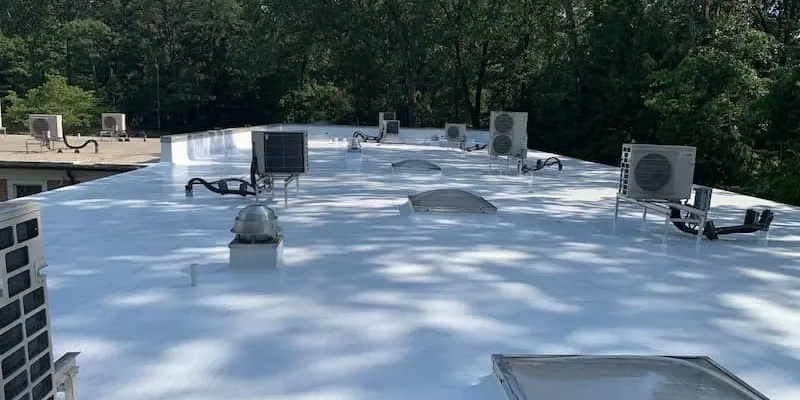
Silicone roof coating quality varies significantly across manufacturers and product lines. Higher-grade silicone roof coatings cost more per gallon but offer better performance and longer-lasting protection. Budget-grade coatings may save money initially but often require more frequent recoating or fail to deliver the same level of durability and weather resistance. Premium roofing coatings are typically designed to last longer, resist UV damage better, and perform more reliably through heat, rain, and standing water. A reflective white silicone coating can also help reduce rooftop heat absorption, which may support better energy efficiency inside the building.
Coating thickness is another critical factor that affects both cost of materials and long-term performance. Most silicone roof coating systems require a minimum degree to achieve proper protection and coverage. Thicker applications use more silicone per square foot, which increases coating costs but provides better protection against UV damage, ponding water, and temperature extremes.
Standard commercial applications typically use 20 to 30 mils of coating thickness, while some high-performance systems go even thicker. Doubling the coating, doubles the amount of material needed, which directly impacts your expenses. However, thicker coatings often come with longer coverage and better performance guarantees. When comparing options, understanding the cost of a new roof and what drives it provides helpful context for evaluating coating investments versus full replacement.
Warranty considerations tie directly to the materials’ quality and thickness. Premium silicone coatings often include manufacturer warranties that protect your investment for 10, 15, or even 20 years. These warranties may cover both material defects and performance issues like leaks. Cheaper materials typically offer shorter periods or no coverage at all, which means you take on more risk if problems develop.
4. Labor and Contractor Selection
Labor costs make up a significant portion of your total budget. Experienced roofing contractors charge more per hour or per sq. ft. than less experienced crews, but their expertise often saves money in the long run. Proper install technique ensures the coating adheres correctly and performs as designed, while poor workmanship can lead to failures that require expensive repairs or recoating.
The complexity of your roof affects how much time the undertaking requires. Simple flat roofs with easy access and few obstacles take less time to coat than roofs with multiple penetrations, HVAC units, skylights, and complex drainage systems. Each obstacle requires careful detail work to ensure proper coverage and sealing. This added attention increases hours and drives up coating roof labor costs. If you are weighing your options, our guide on pro roofers or DIY explains why professional installation matters for coating projects.
Contractor selection also influences your warranty coverage and long-term results. Many manufacturers require certified installers to maintain validity. Choosing a company without proper certification may void your silicone roof coating warranty, leaving you without protection if problems arise. Certified contractors have training in proper installation methods and quality control procedures.
Getting multiple quotes helps you understand the range of costs in your area. However, the lowest bid is not always the best value. Look for contractors who provide detailed breakdowns of work, materials, and prep work. Ask about their experience with silicone coatings specifically, not just general roofing work. References from similar projects give you insight into their quality and reliability.
5. Roof Access and Building Features
Building height and roof accessibility significantly impact silicone roof coating pricing. Single-story buildings with easy roof access keep costs lower since workers can move materials and equipment efficiently. Multi-story buildings require lifts, scaffolding, or crane access to get crews and materials onto the roof safely. This equipment rental adds to your budget.
Roof obstacles and features also affect how much time the task requires. HVAC units, vents, pipes, skylights, and other penetrations need careful attention during coating application. Each penetration requires detail work to ensure proper sealing and coverage. Learning about the different pipes on your roof helps you understand why these areas require extra work during coating projects.
Parapet walls and roof edges add to the total surface area that needs coating. These vertical surfaces require the same careful implementation as the main roof deck. Tall parapet walls can add substantial sq. footage to the job, increasing both materials and worker costs. Some projects also require coating the inside of parapet walls for complete protection.
Site logistics play a role in costs as well. Buildings in tight urban locations with limited parking or staging areas make delivery and equipment setup more challenging. Restricted access times or noise limitations can extend the timeline. These complications add to worker costs and may require additional planning and coordination.
6. System Add-Ons and Prep Work
Surface preparation is essential for proper adhesion, and the prep work required varies by roof type and condition. Most projects need pressure washing to remove dirt, debris, and loose materials before coating is installed. For commercial flat roofs, proper flat roof cleaning is critical before any coating work begins. Some roofs require more intensive cleaning or chemical treatments to remove stubborn contaminants.
Primers and base coats are often necessary to ensure proper coating adhesion, especially on certain roof types. Metal roofs, aged single-ply membranes, and some modified bitumen systems benefit from specialized primers that improve bonding. These additional roof coating layers increase costs of materials and require extra crew for application. However, skipping necessary primers can lead to adhesion failures and coating delamination.
Reinforcement fabric adds strength and protection in vulnerable areas like seams, penetrations, and roof edges. This fabric gets embedded in the coating to prevent cracking and improve durability. Projects that require extensive reinforcement use more material and crew, which increases costs. However, proper reinforcement prevents common failure points and extends the life of your roof.
Flashing and detail work around roof penetrations requires careful attention and specialized roofing materials. Each vent, pipe, or skylight needs proper sealing to prevent water infiltration. Understanding how to pick the right flashing for your vent pipe helps you appreciate why this detail work matters. Some projects require custom flashing or additional layers of coating in these critical areas.
7. Regional and Seasonal Cost Factors
Regional market rates affect costs across different areas. Crew and pricing of roofing materials varies by location based on local competition, demand, and cost of living. Maryland commercial roofing projects may have different pricing than similar work in other states. Understanding how much a new roof will cost in Maryland provides useful context for evaluating estimates in our region.
Seasonal demand influences when roofing contractors can schedule the job and what they charge. Spring and fall are peak seasons for commercial roofing work, which can lead to higher prices and longer wait times. Summer heat and winter cold limit installation windows, so contractors may charge premium rates for projects during these challenging periods. Planning the job during slower seasons may help you secure better pricing.
Weather conditions directly impact installation and timelines. Silicone coatings require specific temperature and humidity ranges for proper curing. Rain, high winds, or extreme temperatures can delay work and extend the job timeline. These delays may increase work costs if crews need to return multiple times to complete the work.
Local building codes and permit requirements add to project costs in some areas. Commercial roofing projects often need permits and inspections, which come with fees and paperwork. Some jurisdictions have specific requirements for varying systems or installation methods. Your contractor should factor these costs into their quote and handle the permit process as part of the project.
Plan Your Silicone Roof Coating Cost After a Roof Inspection
Understanding these cost considerations helps you budget realistically for this type of project. The total cost reflects not just the coating material but the complete system including prep work, repairs, and proper application.
Getting accurate pricing starts with knowing your roof’s current condition and specific needs. A professional roof inspection identifies damage, measures actual sq. footage, and documents aspects that affect project costs. This upfront assessment prevents surprises and helps contractors provide detailed, accurate quotes.
We recommend getting a professional roof inspection before requesting quotes so you know exactly what your roof needs. This inspection gives you a clear picture of necessary repairs, prep work, and the scope of your undertaking. Armed with this information, you can compare contractor proposals more effectively and make informed decisions about your roofing investment.
If you are considering silicone coatings for your commercial or residential roof in Maryland, we are happy to provide an honest assessment and clear pricing. Our team evaluates your roof condition, discusses your goals and budget, and recommends the best approach for your situation. Contact us to schedule an inspection and get a free estimate on protecting your roof with a quality silicone coating system.