



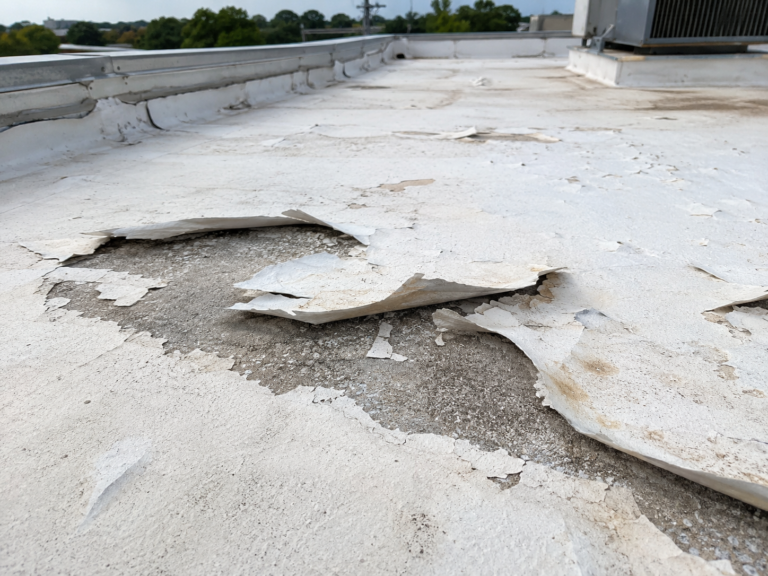
A peeling coating is not just a cosmetic problem. It is usually a sign that the roof coating did not bond properly to the roof. Once that bond fails, water, heat, sun exposure, and normal building movement can work under the coating and shorten the life of the entire system.
The best way to avoid this problem is to treat the project like a real roof restoration, not a quick roll-on fix. Silicone roof coatings can perform extremely well on flat and low-slope buildings, but they depend on proper cleaning, repair, product selection, and application. If the surface is dirty, wet, oily, unstable, or incompatible, even a high-quality silicone product can fail.
Why Silicone Roof Coatings Start to Lift
Most roof coatings fail because something blocks adhesion. Dust, loose material, trapped moisture, oils, and weak old coatings can all separate the new coating from the existing roof. In many cases, the material gets blamed when the real issue was poor preparation.
Oil can prevent adhesion, especially around exhaust fans, restaurant vents, service areas, and HVAC equipment. These areas need more than a light rinse. They need to be cleaned until the surface is ready to accept the coating.
Before any roof coating is installed, the roof should be inspected closely. Look for active leaks, open seams, soft spots, damaged flashing, ponding water, saturated insulation, rust, punctures, and failing old coatings. A roof coating can protect a stable roof, but it cannot save a failing roof assembly.
Surface Preparation
Cleaning is one of the biggest factors in long-term performance. The roof must be washed well enough to remove dirt, algae, dust, loose granules, grease, and residue. Professional cleaners may be needed where buildup is heavy.
Some jobs require solvent wiping before coating installation. Always follow the manufacturer’s instructions. When approved, only use first-grade acetone or virgin paint thinner (VMP) solvent for specific preparation steps. The wrong solvent can leave residue, damage materials, or create a weak bond under the coating.
A clean roof also has to be dry. Moisture trapped under the coating can expand when the roof heats up. That pressure can create bubbles, blisters, and lifted areas. A roof may look dry while still holding moisture in seams, cracks, low areas, and around penetrations.
Test Compatibility Before Full Coating Installation
Not every roof coating works with every roof material. Some membranes need coating primer. Some older roof coatings need removal. Some repairs may contain incompatible sealant. Metal areas may need rust treatment before coating begins.
Silicone coatings are different from acrylic or asphalt-based coatings. You must repair silicone with silicone for compatibility. Silicone can create a strong, waterproof layer when the roof surface preparation is right, but it will not forgive a contaminated surface. A small test patch can show whether the coating will bond before the full roof is covered.
This is where many projects go wrong. If the adhesion test fails, the contractor should change the cleaning process, primer, or system. Guessing is a bad strategy when a full roof coating project is on the line.
Use the Right Primer When Needed
Primer is not always required, but it should never be skipped when the manufacturer calls for it. The right primer helps the roof coating bond to the existing roof. The wrong primer can create a weak layer between the coatings and the roofing.
Primer decisions depend on the existing material, age, condition, past repairs, and previous silicone coatings. Aged asphalt, metal, modified bitumen, single-ply roofing systems, and previously coated surfaces may all need testing.
A strong adhesive bond starts before the silicone sealant application. If the base layer is weak, the top coating has nothing reliable to hold onto.
Repair Details Before Coating the Roof
The roofing should be repaired before the field coating is applied. Open seams, loose flashing, splits, cracks, punctures, rusted fasteners, and weak penetrations all need proper detail work.
A compatible sealant may be needed around drains, curbs, seams, transitions, and penetrations. Reinforcement fabric may also be required in high-movement areas. These details help the silicone roofing system hold together under heat, rain, and normal building movement.
Many leaks start at the details, not in the open field of the roof. If those areas are ignored, the silicone coating may lift or fail even if the rest of the roof looks fine.
Apply the Correct Thickness
A roof coating must be installed at the correct thickness. Thin spots leave weak protection. Heavy spots can slow curing and create uneven performance. The installer should measure wet film thickness during application, not guess by eye.
Manufacturer coverage rates matter. The contractor should plan sections, track material use, and confirm that the roof receives the proper amount of coating. This is especially important for commercial roof coatings, where small mistakes can spread across thousands of square feet.
Silicone roof coatings also need the right weather window. Rain, dew, low temperatures, heavy humidity, and wind can affect the finished system. If the coating is exposed too soon, it may cure poorly or lose adhesion.
Respect Cure Time and Foot Traffic
Silicone may feel dry before the coating reaches full strength. Foot traffic, tools, HVAC panels, and other trades can damage the roof before the system is ready.
The cure time depends on product type, film thickness, humidity, and temperature. Follow the manufacturer’s instructions closely. Keep traffic limited until the coating can handle it.
Maintenance matters after the job too. A coated roof should be inspected regularly. Drains should stay clear. Debris should be removed. If damage happens, use approved repair materials quickly.
Get a Professional to Avoid Coating Mistakes
A silicone roof project may look simple from the outside, but the process requires careful judgment. Most roof coating failures start before the coating ever goes down. The most common coating mistakes stem from treating the project like paint instead of a roofing system. The contractor needs to understand cleaning, moisture testing, primer selection, compatibility, detail repair, weather timing, and coverage rates.
This is where experience protects the owner. A professional knows when the roof is ready, when the surface needs more prep, and when the existing system is too damaged for coating alone.
A rushed silicone roof job can peel, trap moisture, and waste money. A properly installed silicone system can support long-term waterproofing, energy performance, and leak protection.
Get a RoofPRO Inspection Before Applying Silicone
Not every flat roof is a good candidate for silicone coating, and that is where a professional inspection matters. RoofPRO will evaluate the current roofing system, check for active leaks, inspect seams and flashing, look for trapped moisture, and determine whether the surface is stable enough for a silicone roof coating. If silicone is the right fit, the team can explain the proper cleaning, repair, primer, and application steps needed to help deter peeling and premature failure. If the roof needs repair or replacement instead, you will get clear guidance before money is spent on the wrong solution. Schedule a roofing inspection with RoofPRO today and find out whether silicone roof coating is the right way to protect your property.