Types of Roof Ventilation Systems We Install
Roof ventilation systems aren’t one-size-fits-all. Some systems work best for newer homes with open attics, while others make sense for smaller homes, hip roofs, or even metal roofing. Here’s a breakdown of the main ventilation types we work with and when they make the most sense.
A roof needs a way to let trapped air escape while allowing fresh air to enter. This airflow usually runs from the lower edge of the roof (the soffits) up to the highest point (the ridge or gable). A well-designed system uses both intake and exhaust vents. Intake vents pull in outside air, while exhaust vents let hot, moist air out.
Ridge Vents
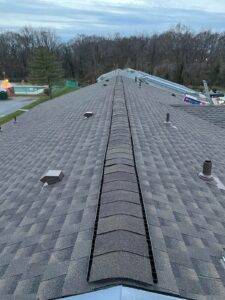
Ridge vents run along the peak of the roof, blending in for a clean look. They create an opening that lets hot, humid air flow out naturally at the higher points of the attic. Ridge vents don’t need power and, when paired with soffit vents, offer consistent performance in our variable Maryland climate. We recommend ridge vents for most modern roof replacements and new builds because they work quietly and don’t stand out visually.
- How They Work: When paired with soffit vents, ridge vents support a steady flow of air—cool air in through the soffits, warm air out through the ridge.
- Advantages: Low-profile design, no moving parts, even airflow distribution.
- Best For: Roofs with long ridge lines, full replacements, and homeowners seeking a clean, modern appearance.
Soffit Vents
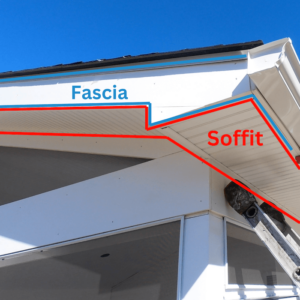
Soffit vents are installed under the eaves and serve as the intake for your system. By bringing in cool outside air, they push warm, stale air up and out. Proper soffit ventilation prevents condensation and wood rot, especially in homes with large attic spaces. Sometimes, we find old soffits that are painted shut or blocked by insulation—an easy fix, but one that makes a big difference in attic airflow. We inspect and clean soffit vents during roof and attic evaluations, especially in older homes where insulation may block air pathways.
- Key Role: These vents balance out exhaust vents by providing the intake portion of the airflow cycle.
- Styles: Available as individual rectangular vents, continuous strips, or built-in perforated panels.
- We Recommend Them: For nearly all homes, especially those with ridge vents. A well-balanced intake and exhaust system starts with soffit vents.
Gable Vents
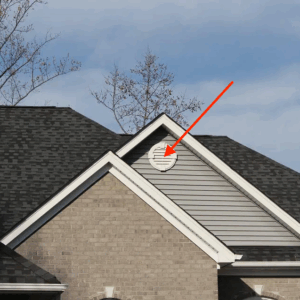
Gable vents sit high on the end walls of a house. You’ll see them most often in older Maryland homes or certain Cape Cod and Colonial styles. They can be square, round, or even decorative. Gable vents let air escape horizontally but don’t always work well alone, especially on bigger roofs. Sometimes, pairing gable vents with other systems (like soffit or ridge vents) gives better results. We always check for cross-ventilation issues before recommending upgrades.
- How They Work: They allow cross-ventilation when there are openings on opposite ends of the attic.
- Style Options: Functional and decorative options in wood, aluminum, or vinyl.
- Ideal Situations: Homes with gable-style roofs, particularly older homes where other systems are harder to retrofit.
Box Vents (Roof Louvers)
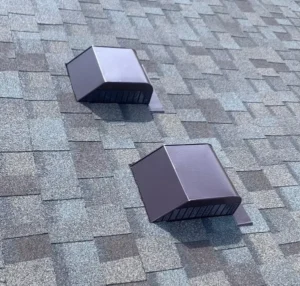
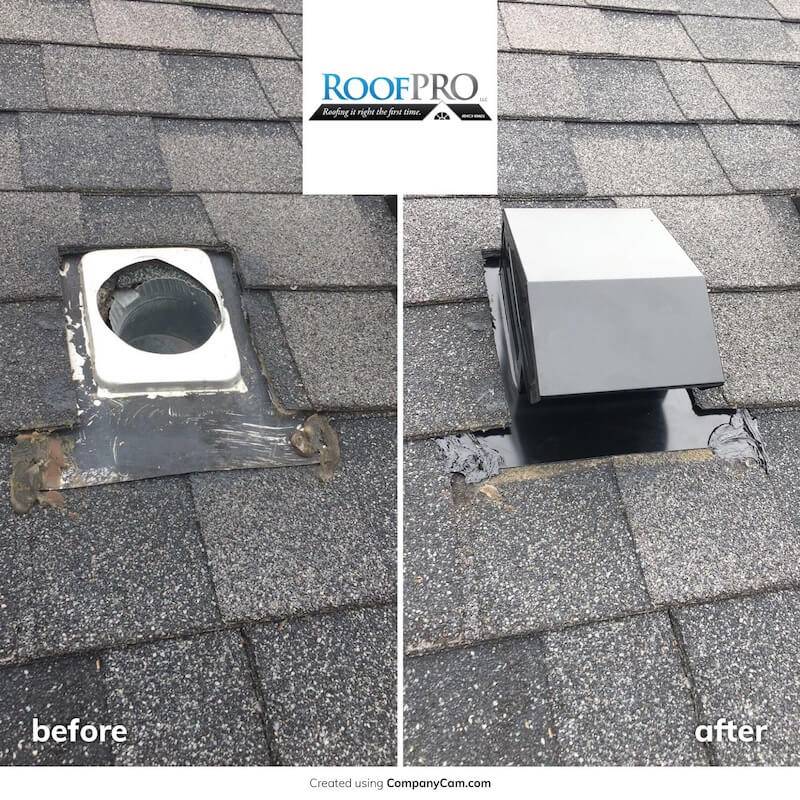
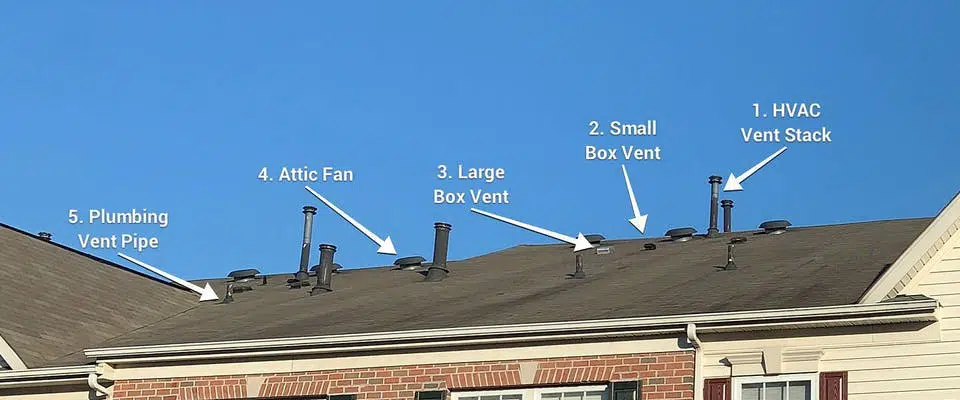
Box vents, also called louver vents or low-profile vents, are individual units installed near the top of the roof. They’re a good solution for homes without a continuous ridge line or with complicated roof shapes. Roof louvers let air escape vertically and can be placed wherever hot spots appear. We use them in Maryland’s humid climate where ridge vents aren’t feasible or where there’s a need for targeted airflow.
- Function: Uses natural convection to allow hot air to escape without any mechanical assistance.
- Installation Needs: Often multiple vents are needed to meet airflow requirements.
- Common Use: On roofs where ridge vent installation isn’t feasible or where a few strategic upgrades are needed.
Turbine Vents
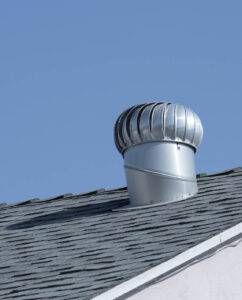
Turbine vents spin in the wind and create a vacuum effect that draws air out of the attic. They require no electricity and can be a budget-friendly option. Turbine vents work best where there’s a steady breeze, something we get in many parts of Maryland. Because they rely on moving air, we make sure each installation is watertight and sealed properly to prevent rain from being pushed inside. Turbine vents need occasional maintenance to stay quiet and functional, especially if they’ve been exposed to storms or debris.
- Performance: Effective on windy days; can move more air than static vents when spinning properly.
- Appearance & Maintenance: Visible from the ground; bearings may need periodic oiling or replacement.
- We Use Them: For outbuildings, garages, and budget-conscious projects where electricity isn’t available.
Power Attic Vents (Electric or Solar Fans)
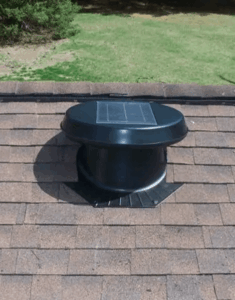
Powered attic vents (either electric or solar) use a built-in fan to help move hot air out of the attic. They’re useful in homes where natural ventilation isn’t enough to keep temperatures under control. Solar models are popular because they run without increasing energy costs, while electric units offer consistent airflow even on cloudy days. These vents work best when paired with proper intake ventilation, so we always assess the attic first to make sure the system can operate efficiently and safely.
- Options: Available in electric models (hardwired into your home) or solar-powered units.
- Pros: High airflow rate; useful for large attics or poor natural airflow conditions.
- Watchouts: Can depressurize the attic if not balanced with adequate intake. Solar versions offer efficiency and low operating costs.