


The best way to ventilate a roof is to treat it like a matched system, not a random mix of vents. Fresh air should enter at the eaves, hot and humid air should exit at the top, and the intake and exhaust need to be sized to the attic using the proper vent-area ratio. When that balance is right, the attic gets steady air flow instead of pockets of trapped heat and moisture.
Most roof ventilation issues happen when that balance is off. Too much exhaust with not enough intake, vents that fight each other, or a setup that never got checked during a roof replacement can all interrupt airflow. Once air stops moving, the attic runs hotter, moisture hangs around longer, and that’s when you start seeing mold, insulation problems, and roofing materials aging faster than they should.
Balance Intake and Exhaust From the Start
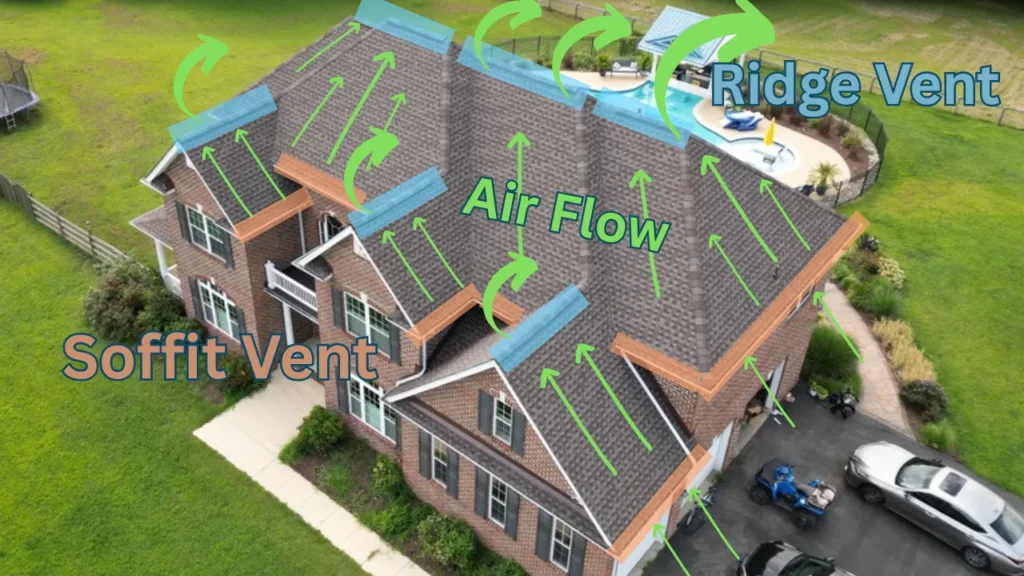
The foundation of proper roof ventilation is balance. For air to move through an attic, fresh air needs to come in at the lowest point of the roof, and hot air needs to exit at the highest point of the roof. Both sides of that system matter equally, and that’s where the importance of balance comes in.
Best practice is to calculate accurate ventilation instead of guessing. Industry guidelines generally call for about one square foot of total vent area for every 300 square feet of attic floor space, with that total split as evenly as possible between intake and exhaust. When intake and exhaust are balanced, air moves steadily through the attic instead of stalling or short-circuiting.
Too much exhaust without enough intake causes the system to pull air from inside the home. Too much intake without proper exhaust traps heat where you don’t want it. Either way, the attic never really clears out.
Use Each Vent for Its Intended Purpose
Every vent on a roof is supposed to do something specific. Ventilation problems usually start when roof vents get mixed together without a plan or when one type of vent is asked to do a job it was never designed to do. The goal is simple: bring fresh air in low, let hot air out high, and make sure the air has a clear path to travel through the attic.
Intake Vents

Intake vents are there to feed the roof ventilation system. Without enough intake, even the best exhaust setup won’t move air the right way, because there’s nothing to replace the air leaving the attic.
Soffit vents are the most common intake vent. They pull fresh air in at the eaves and let it rise naturally through the attic. For these vents to work, they need to stay open on the inside, which is why baffles matter anytime insulation is nearby.
SmartVent is another intake option that’s commonly used when a roof doesn’t have traditional soffits or when the soffit intake is limited. It’s installed along the lower edge of the roof and helps bring air in where a standard soffit system can’t. It can be a good solution for the right home, but it still needs to be paired with the right exhaust above it, or it won’t perform the way it’s intended.
Exhaust Vents
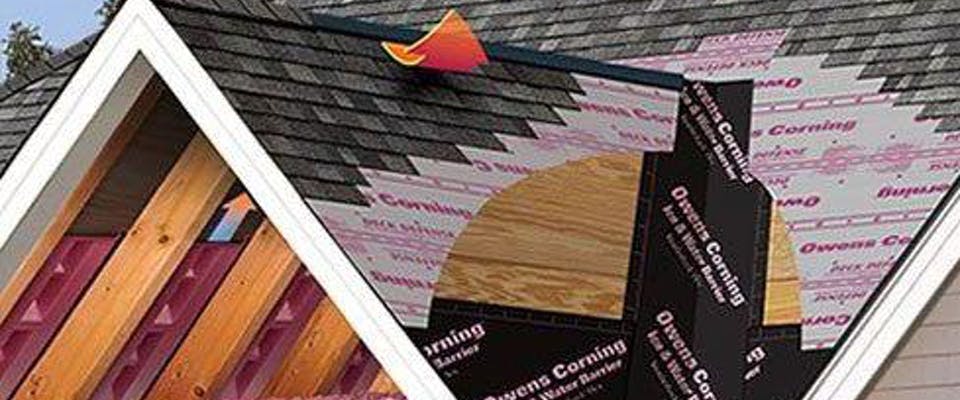
Exhaust vents release hot, moist air from the roof system. These vents belong high on the roof because heat rises, and the system works best when the exhaust is at the top.
Ridge vents are often the preferred exhaust option because they run along the peak of the roof and let heat escape evenly across the entire attic. When ridge vents are paired with continuous intake along the eaves or with SmartVent, you get a steady bottom-to-top airflow pattern, which is what you want.
Box vents are individual vents installed near the top of the roof. They can work well when ridge vents aren’t practical, but they need to be sized correctly and spaced properly. Too few box vents won’t move enough air. Too many in the wrong layout can create odd airflow patterns, especially if intake is limited.
Gable vents are installed on the side walls of the attic near the peak. They were common on older homes, and they can help release heat, especially when paired as opposing vents to create a cross-breeze. The issue is that gable vents don’t always play well with vents along the ridge. If you have vents along the ridge and strong soffit intake, gable vents can short-circuit airflow by letting air enter and exit near the top instead of pulling from the eaves. In many cases, gable vents need to be evaluated case by case, not left open by default.
Attic Fans

Powered attic vent systems act as mechanical exhaust. They can help in specific situations, but they’re also one of the easiest ways to create problems if the rest of the ventilation system isn’t set up correctly.
An attic fan should only be used when intake ventilation is already strong and clearly defined. If intake is weak, a fan will still pull air, but it will pull it from the easiest source, which can be other vents or even conditioned air from inside the home. That can cancel out airflow, create dead zones in the attic, and in some cases increase moisture risk instead of reducing it.
Placement matters too. If a fan is positioned in a way that short-circuits airflow, it can pull air from nearby vents instead of pulling fresh air from the eaves. That’s when you see sections of the attic that never get proper airflow, which is where heat and moisture problems build.
Avoid Mixing Attic Ventilation Systems
One of the most common mistakes in attic ventilation is mixing different roof exhaust systems without a plan. Ridge vents, box vents, gable vents, and attic fans all move air differently. When they’re combined randomly, they compete with each other instead of working together.
For example, a powered attic fan or gable vent can pull air from a ridge vent instead of pulling fresh air from the soffits. When that happens, large sections of the attic never see airflow. This creates dead air pockets where heat and moisture build up, increasing the risk of mold and decking damage.
Adding more vents does not automatically improve ventilation. In some cases, over-ventilating or mixing systems actually makes airflow worse.
Always Reevaluate Roof Ventilation During Roof Replacement
A new roof is the best time to correct ventilation issues, but it’s often overlooked.
Every home changes over time. Attics get more insulation, additions get added, and airflow patterns shift. A ventilation setup that worked twenty years ago may no longer be effective today.
Best practice is to reevaluate intake, exhaust, attic layout, and insulation every time a roof is replaced. Ventilation should be designed as part of the roofing system, not treated as an afterthought once shingles are already installed.
How to Calculate the Right Vent Area for Intake and Exhaust
A simple way to size ventilation is to use the 1:300 rule. That means you want about 1 square foot of total ventilation for every 300 square feet of attic floor space. Start by measuring the attic floor area, then divide by 300 to get your total venting in square feet. Convert that total into square inches by multiplying by 144, since most ventilation products are rated using that measurement.
Once you have the total, aim for a balanced split between intake and exhaust, usually close to 50/50. Use the airflow ratings on the vent products to add up your lower vents to hit the intake target, then do the same for the vents that release air at the top. If one side is much higher than the other, airflow usually suffers, even if you have “a lot of vents.”
Intake at the Eaves Requires Baffles
If your intake air comes in through the eaves, baffles are essential. Without them, insulation can block soffit vents and stop airflow before it ever reaches the attic.
Baffles create a clear channel for air to move from the soffit into the attic space while keeping insulation in place. Many homes have vents in the soffit that look fine from the outside but are completely blocked inside.
It’s also important to check that your vents in the soffit aren’t painted over, clogged with debris, or obstructed. Intake ventilation only works when air can actually get in.
Be Careful With Attic Fan Placement
An attic fan needs to be placed carefully, or it can do more harm than good. A fan installed too close to other roof vents can pull air from the wrong place instead of drawing fresh air from the eaves.
When airflow gets disrupted like that, parts of the attic see little to no movement. Heat and moisture linger, which increases the risk of mold and reduces the effectiveness of the entire system. In some cases, an attic fan can even pull conditioned air from the living space, increasing energy costs.
Best practice is to only use an attic fan when intake airflow is clearly established and the fan placement supports the overall ventilation strategy.
What Proper Ventilation Should Accomplish
When roof ventilation is done correctly, it doesn’t draw attention to itself. Attic temperatures stay closer to outdoor conditions, moisture doesn’t linger, and roofing materials age the way they’re supposed to.
You shouldn’t have extreme heat upstairs, musty attic smells, or signs of moisture damage. When those issues show up, it’s usually a sign that airflow is blocked, unbalanced, or working against itself.
Schedule a Roof Ventilation Check
If you want your residential roofing system to last, ventilation has to be sized and balanced correctly. Our team has been roofing for over 20 years, working on all types of buildings located across Maryland. We’re certified with leading roof manufacturers like GAF and Owens Corning, and we’ve installed ventilation solutions on all types of roof systems, including asphalt shingle, metal, and slate. We also pay attention to roof drainage, because water that lingers at valleys and edges can undo good ventilation fast. That roofing experience matters because attic ventilation is never one-size-fits-all. The right setup depends on the roof design, the attic layout, and how the building actually moves air day to day. If your attic runs hot or your roof keeps wearing out early, contact our team take a look and recommend the right fix.

Author Bio
Tim Taylor – Owner & Founder of RoofPRO
Tim Taylor began roofing in 2003 and founded RoofPRO in 2004 to fight poor workmanship. With over 20 years of hands-on experience, he focuses on leak repair, flashing, and post-storm restoration. He holds CertainTeed ShingleMaster Wizard credentials, HAAG inspection certifications, and OSHA safety training. In 2025, he was named a finalist for the BBB Torch Awards for Ethics in Greater Maryland. He also leads RoofPRO to serve the community through veteran roof relief projects with Habitat for Humanity and Owens Corning. Tim still runs the team on one rule: roof it right the first time.