
Rigid sun tunnel
June 10, 2023

If you’re looking for the best alternative to skylights for natural light, sun tunnels and solar tubes are the most effective option for most homes. They deliver bright, natural daylight into interior spaces using a small roof opening and a reflective tube, without the cost, leak risk, or structural changes required by traditional skylights.

Other alternatives, such as artificial lighting panels or strategic window placement, can also improve lighting, but sun tunnels remain the most practical and reliable choice for bathrooms, hallways, closets, and other enclosed areas.

Why Homeowners Look for Alternatives to Traditional Skylights

Placement Limitations of Traditional Skylights

Many homeowners love the idea of skylights at first but start to hesitate once they learn what’s involved. Skylights require a large opening in the roof and can only be installed in certain areas. In many homes, the rooms that need more light simply are not in the right location for skylights.

Lower Leak Risk With Skylight Alternatives

Leaks are a common concern with skylights. Installing one means cutting into the roof and adding multiple flashing points. Over time, those areas can become vulnerable, especially with heavy rain or changing temperatures.

Easier Maintenance Over Time

Ongoing maintenance is also a consideration. Skylights typically require periodic cleaning and occasional sealing to keep them performing properly. As they age, maintenance demands can increase.

A Practical Option During Roof Replacement

When a roof is being replaced, many homeowners still want more natural light but do not want to add or deal with typical skylights. This is where different lighting options come in.

Top Alternatives to a Traditional Skylight

You do not need standard skylights to add sunlight to your home. There are several options that can brighten interior spaces using daylight or light-reflecting systems. Among those options, sun tunnels stand out as the most popular and efficient way to bring in real sunlight.

Sun Tunnels and Solar Tubes

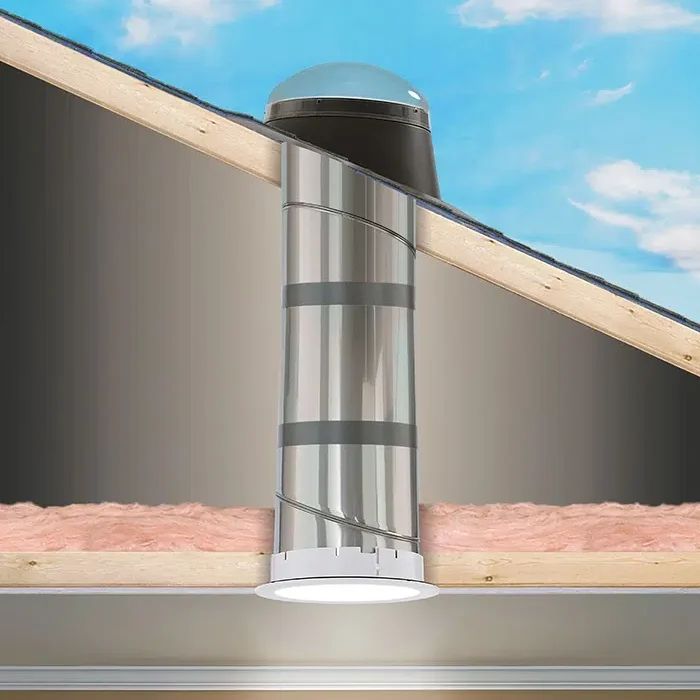
Sun tunnels, sometimes called solar tubes, are one of the most efficient alternatives to skylights. Instead of cutting a large opening into the roof, a sun tunnel uses a small rooftop dome and a highly reflective tube to bring natural daylight into the home. The sunlight is then diffused evenly inside the room, making dark or enclosed spaces feel brighter without changing the structure of the roof.

Sun tunnels work especially well in areas where a skylight would not make sense, such as bathrooms, hallways, closets, laundry rooms, and interior spaces that do not sit directly beneath an open roof section. Because the system can be routed around attic framing, it offers far more placement flexibility than normal skylights.

Pros

  • Sun tunnels require a much smaller roof opening than skylights.
  • Installation is typically faster and less disruptive.
  • They bring in real natural daylight without adding significant heat gain or loss.
  • Maintenance is minimal, with no cleaning needed.
  • They are a cost-effective way to brighten interior rooms.

Cons

  • Sun tunnels do not provide a view of the sky.
  • Light coverage is more focused than regular skylights.
  • They are not designed to brighten large open areas on their own.
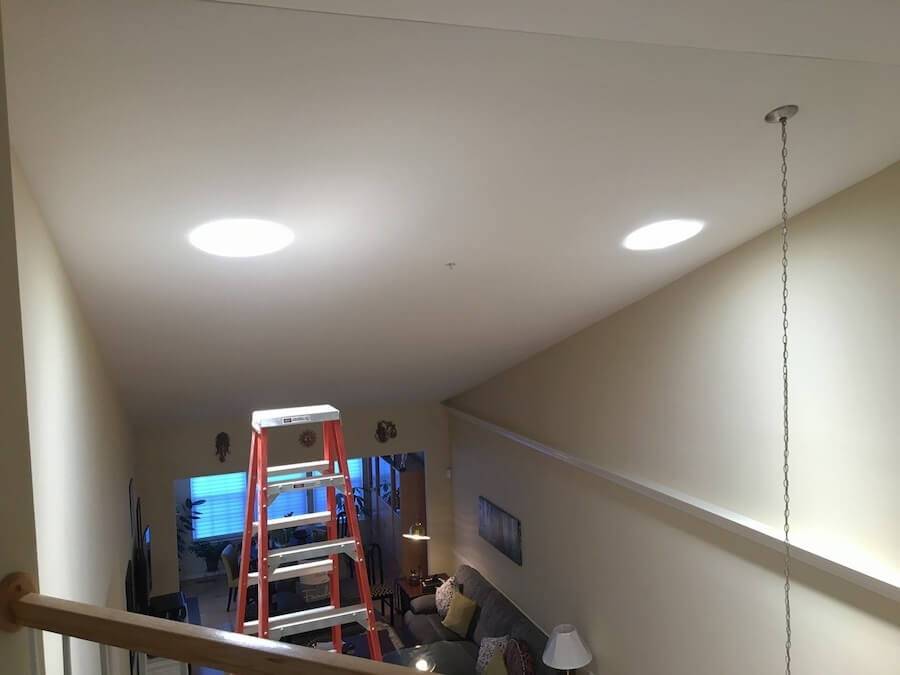
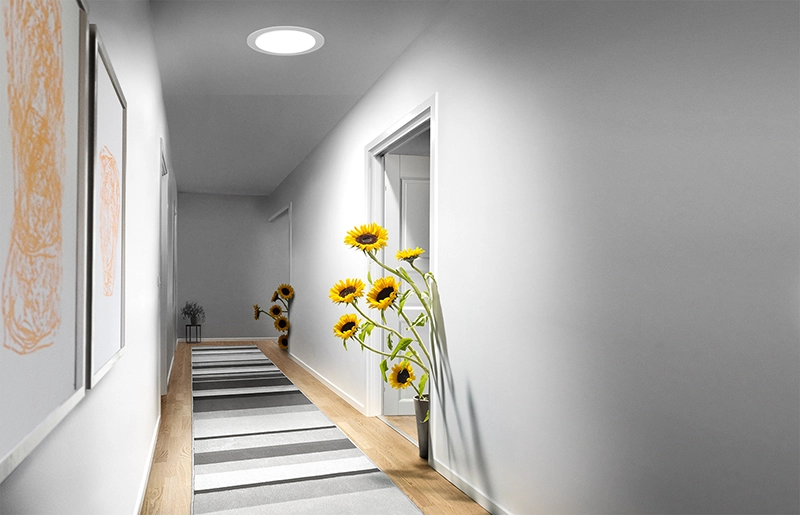
Sun tunnel illuminating hallway with natural light.

Additional Ways to Increase Natural Light Indoors

Sun tunnels are the most popular choice, but they are not the only way to brighten a home. In some situations, other lighting or design solutions can help improve indoor light, especially when roof access is limited or natural daylight is not a priority.

Artificial Skylights and LED Light Panels
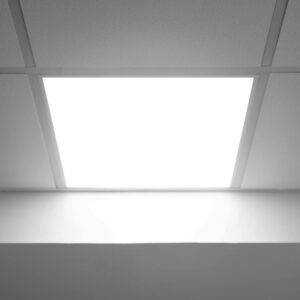
artificial skylight alternative LED light Artificial skylights and LED lights are designed to mimic the look of natural daylight. These systems work well in rooms with no roof or window access, such as basements or interior offices. Even though they do not provide real sunlight, they offer consistent brightness regardless of weather or time of day.

Clerestory Windows

Clerestory windows are installed high on exterior walls and are most commonly added during new construction or major remodels. In existing homes, adding clerestory windows usually requires significant structural changes, which can increase cost and disruption. Because of this, they are not an ideal option for most homeowners simply looking to add more natural sunlight to an existing room.

Light Shelves

Light shelves are design features that reflect daylight deeper into a room, but they are usually planned during new construction or major renovations. In existing homes, adding light shelves often requires changes to window placement or interior design. 

Larger or Strategically Placed Windows

In some homes, adding a larger window or adjusting where a window is placed can help improve lighting. This usually works best when the room has an exterior wall and does not require major structural changes. For rooms located deeper inside the home, windows alone often are not enough.
best alternative to skylights

Sun Tunnels vs a Skylight

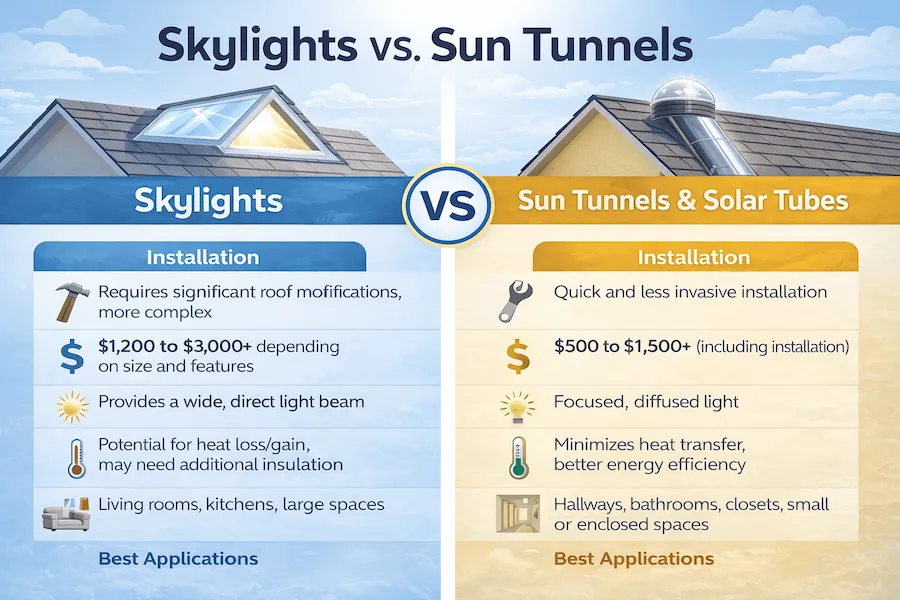
The choice between a sun tunnel and a skylight depends on several key factors. Installation requirements, overall cost, light output, and energy efficiency all differ between the two. Looking at each of these areas side by side helps clarify which method works best.

Installation Differences

Installing a skylight means cutting a large opening into the roof and adjusting the framing to support it. That makes the job more involved and limits where a skylight can go. Sun tunnels only need a small roof opening and can be routed around attic framing, which makes them easier to install and more flexible when it comes to placement.

Cost Comparison

Skylights typically cost more due to labor, structural changes, and flashing work. Sun tunnels are usually more affordable because installation is simpler and less invasive. For homeowners looking to add natural daylight without a larger investment, sun tunnels are often the more budget-friendly choice.

Light Output and Coverage

Skylights fill a room with outdoor light and can make it feel more open. Sun tunnels produce a strong, focused brightness that works best in smaller spaces. Even though they are not designed for large open rooms, they are very effective in enclosed areas.

Energy Efficiency and Heat Transfer

Skylights can let extra heat into the home during summer and allow warmth to escape in colder months if they are not well insulated. Sun tunnels are designed to limit heat transfer, which helps keep indoor temperatures more consistent. For many homes, that makes them the more energy-efficient choice.

Best Rooms for Each Option

Skylights are often used in larger spaces like living rooms or kitchens when the goal is to flood the room with daylight. Sun tunnels can also be used in these areas, but the light they provide is more focused. In larger rooms, multiple sun tunnels may be needed to achieve the same level of brightness, while a single unit can still make a noticeable difference in smaller or enclosed spaces.

new roof with sun tunnel
installing sun tunnels

Is a Sun Tunnel Cheaper Than a Skylight?

In many cases, yes. Sun tunnels usually cost less because there is simply less involved in the installation. The roof opening is smaller, the work is more straightforward, and fewer changes are needed to the roof structure.

The total cost depends on the square footage of the room you want to place it. One sun tunnel can be a cost-effective solution if the room is the right size, while larger areas may need more than one. Even so, many homeowners find sun tunnels offer a great balance of cost and daylight compared to regular skylights.

What Are the Drawbacks of Sun Tunnels?

Focused Light Output

Sun tunnels work well in many situations, but they are not the right fit for every room. The main limitation is light output. They bring in real daylight, but the light is more focused than what full skylights provide. Because of that, sun tunnels are especially well suited for smaller rooms, while larger spaces may need more than one to achieve the desired brightness.

No View of the Outdoors

Another thing to consider is that sun tunnels do not provide a view of the outdoors. Unlike skylights, they are designed purely to illuminate the room, not to offer a visual connection to the outdoors. For homeowners who want both daylight and a view, this can be a drawback.

Light Levels Change Throughout the Day

Sun tunnels also depend on available light during the day, so brightness can vary throughout the day and season. On cloudy days or during winter months, light levels may be lower than on bright, sunny days. Many systems include small, solar-powered night lights, which provide gentle illumination after dark, but they are not meant to replace full lighting at night.

Placement Still Matters

Finally, sun tunnels do offer more placement flexibility than skylights, but they still need to be planned carefully. Roof layout, attic space, and obstructions can affect where they can be installed and how much daylight they deliver. Proper placement makes a noticeable difference in overall performance.

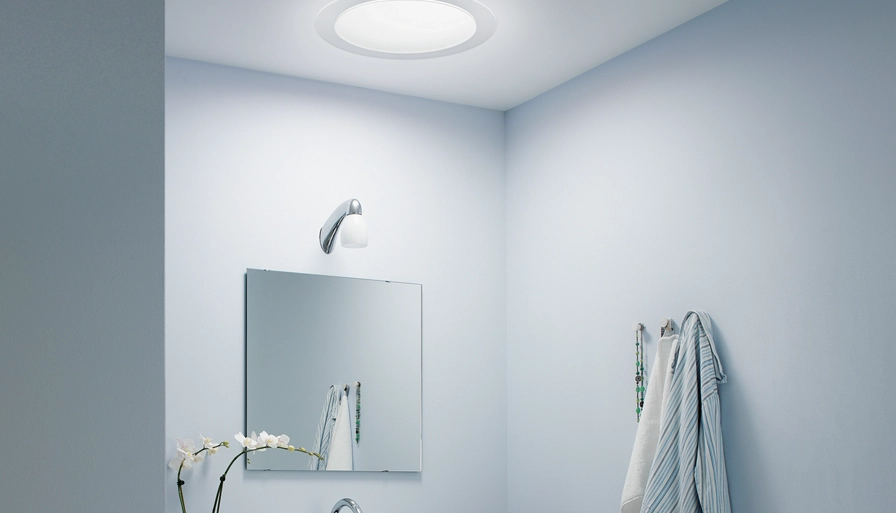
Bathroom with a sun tunnel.

Choosing the Best Skylight Alternative for Your Home

Some homeowners prefer a solution that requires very little upkeep. Sun tunnels are sealed systems that do not need regular cleaning or ongoing adjustments. Choosing a low-maintenance approach can help reduce long-term costs and concerns over time.

Based on Room Type

Different rooms call for different lighting solutions. From experience, sun tunnels work especially well in bathrooms, hallways, closets, and laundry rooms where daytime light is needed but a full skylight does not make sense. They are also commonly installed in kitchens and living areas when homeowners want to brighten the space without overwhelming it with daylight. In larger rooms, adding more than one set of tubular lights is often the best way to get balanced results.

Based on Budget

Budget is often a deciding factor. In many installations, sun tunnels end up being the best solution because they provide real daylight without the higher cost that comes with large skylights. Every project is priced differently depending on the home; a simple installation with fewer structural changes usually keeps costs more manageable. This is often why homeowners choose sun tunnels when they want noticeable results without over-complicating the project.

Based on Roof Design

Roof design plays a bigger role than many homeowners expect. Certain roof layouts, attic framing, or obstructions can limit where skylights are placed. Based on hands-on installation experience, sun tunnels offer far more flexibility. Their ability to route around obstacles makes them a great choice in homes where skylights simply don’t fit.

Based on Maintenance and Longevity

Long-term upkeep is another important consideration. Many homeowners prefer something that does not require ongoing attention. Sun tunnels are sealed systems and, when installed properly, require very little maintenance over time. 

Frequently Asked Questions About Skylight Alternatives

For most houses, a sun tunnel is a better choice. It brings in real natural daylight using a much smaller roof opening, which reduces installation complexity and long-term risk. They also offer more placement flexibility, making them a great approach for rooms where a skylight would not work.

Yes, for many homeowners they are. Sun tunnels are especially worth it in spaces that feel dark but do not need a large amount of light. They provide noticeable natural daylight, require minimal maintenance, and typically cost less to install. Based on feedback we’ve received, most of our clients are surprised by how much they brighten a room.

The cost to install a sun tunnel varies based on roof type, attic layout, and room location. In general, they are more affordable because installation is simpler and requires fewer structural changes. A professional evaluation is the best way to get an accurate estimate for your home.

Sun tunnels are less likely to leak because the design is much simpler. They have fewer moving parts and less flashing than a traditional skylight. The opening is circular, so water sheds off naturally instead of pooling like it can along the top edge of a skylight. Debris is also less likely to collect around it, which reduces wear over time. When installed properly, the simpler design gives water fewer places to cause problems.

A solar tube is another name for a sun tunnel. It is a daylighting system that captures daylight at the roof and directs it through a reflective tunnel into the home. The terms “solar tubular” and “sun tunnel” are often used interchangeably to describe the same type of natural lighting products.

Over 20 Years of Sun Tunnel Installation Experience

RoofPRO has been installing these products across Maryland for over 20 years. During that time, we have completed hundreds of installations on homes with different roof styles, layouts, and conditions, so we know what works and what to avoid.

We are a VELUX certified installer, which means we follow proper installation standards and work with one of the most trusted names in daylighting. Our company also holds an A+ rating with the Better Business Bureau and has earned hundreds of five-star reviews on Google from homeowners across Maryland.

At the end of the day, experience matters. Installing these systems correctly the first time is what protects the roof and delivers the results homeowners expect.

Schedule a Free Consultation for Sun Tunnel Installation

If you are thinking about adding natural daylight to your home or a skylight installation, talking with an experienced installer can make the decision much easier. The team at RoofPRO can review your space, explain your options, and help you decide which direction to go. Reach out to schedule a free consultation and get straightforward guidance based on your home and your goals.

Reach Out Today!

We are a trusted source for skylights, sun tunnels, and more! Contact our professional team today for a free estimate.
Tim Taylor, President of RoofPRO LLC in Maryland

Author Bio

Tim Taylor – Owner & Founder of RoofPRO

Tim Taylor began his roofing career in 2003 and founded RoofPRO in 2004 with a mission to fix the poor workmanship that often causes roof leaks. With over 20 years of hands-on experience, he’s earned elite credentials like CertainTeed’s ShingleMaster Wizard certification, HAAG inspection certifications, and OSHA safety training. His expertise in leak repair, flashing repair, and post-storm restoration has made RoofPRO one of Maryland’s most trusted roofing companies. Tim continues to lead with the same principle that built his reputation—roof it right the first time.