
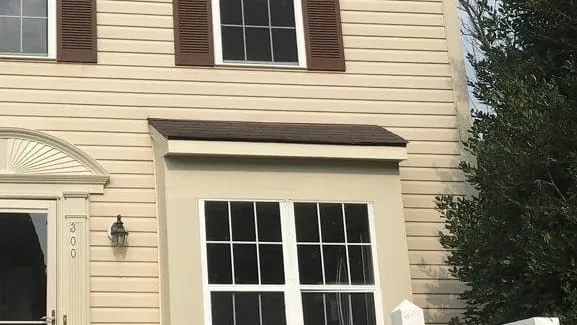
Bay window roofs often get overlooked until something starts to leak or look worn. Even though they are small, these roof sections play an important role in protecting the window and the wall below it. Homeowners searching for bay window roof information are usually trying to understand what type of roof they have, why problems happen, and whether repair or replacement makes sense. This page breaks down common bay window roof options, explains where issues tend to come from, and helps you understand when replacement is the right move.
What Is a Bay Window Roof?
A bay window roof is the small roof section that sits above a bay window and ties into the main structure of the house. Its main job is to direct water away from the window and the wall below, helping protect the interior of the home.
It is also common for a bay window roof to use a different roofing material than the main roof, such as metal instead of shingles. This is completely normal and often done for durability or design reasons.
How Bay Window Roofs Differ From the Main Roof
A bay window roof is its own roof section, separate from the window itself and often separate from the primary roof system. In many cases, it can be repaired or maintained independently, especially when it is made from metal or copper. Replacing the main roof does not always mean the bay window roof needs to be replaced at the same time. Problems usually originate from how the bay roof ties into the side of the house rather than from normal wear or storm damage, since these roof sections sit lower and are less exposed than the rest of the roof.
Common Bay Window Roof Styles
Designed With Hip Rafters
A hip-style bay window roof uses angled surfaces on multiple sides. This is a design choice made when the home is built and is common on traditional-style houses.
Gable-Style Bay Window Roofs
A gable-style bay window roof connects directly into the main roof and projects outward like a small gable. This design is often used when the bay window lines up with the main roof structure.
Shed-Style and Flat Bay Window Roofs
Shed-style bay window roofs use a single straight slope, while flat versions have very little pitch. These are simple, practical designs commonly chosen by builders.
Why Bay Window Roofs Are Prone to Problems
Bay window roofs are small, but they connect to several different parts of the home. Over time, those connection points are usually where problems begin, not across the roof surface itself.
Flashing Where the Roof Meets the House
One of the most common trouble spots is the flashing where the bay window roof connects to the side of the house. Water naturally runs down the wall above this area, so that connection has to be handled correctly to keep moisture out.
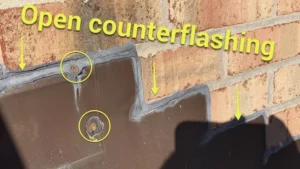
When homes have siding, issues can develop when flashing is not properly tucked behind the siding and house wrap. When that happens, water can get behind the wall system and work its way down to the bay window roof connection.
Siding or Masonry Above the Roof
The materials above the bay window roof play a big role in keeping water out. On brick homes, mortar joints can slowly break down over time. While it’s rare for water to pass straight through solid brick, older or deteriorating mortar can allow moisture in, especially near flashing where the roof meets the wall. That moisture can then work its way down behind the roof connection.
On homes with siding, problems are more likely to come from the wall system itself. If siding is damaged, improperly installed, or no longer sealing correctly, water can slip behind it. When the house wrap or other waterproofing layer behind the siding is compromised, water can travel down inside the wall and show up around the bay window roof area.
Leaks Originating From Windows Above
Windows located above a bay window roof can also be the true source of leaks. When water problems appear around a bay window, the roof often gets blamed, even though the issue may be coming from higher up.
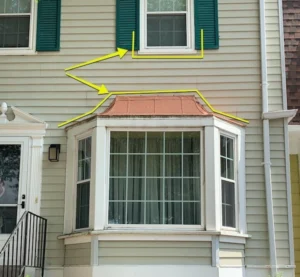
In other cases, the edges where the window meets the house may have been sealed primarily with caulk. As caulk ages and breaks down, gaps can form that allow water to slip behind the window frame.
If proper flashing tape was never installed around the window, water can also get behind the sides or bottom of the frame. Once inside the wall cavity, water often travels downward and collects at the bay window roof connection, making it appear as though the roof is the issue.
Age and Material Wear Over Time
Age can also be a factor. Over time, roofing materials naturally wear down, whether the bay window roof is made of shingles, metal, or another material. While issues often start at flashing or connection points, the roof covering itself can eventually reach the end of its lifespan and contribute to leaks. That’s why it’s important to evaluate both the roof material and the surrounding details when problems appear.
Bay Window Roof Repair vs. Replacement
When problems show up around a bay window roof, the next question is usually whether it can be repaired or if it needs to be replaced. Because these roof sections are separate from the main roof, the answer often depends on the condition of the materials and where the issue is coming from, not just the age of the home.
When a Bay Window Roof Can Be Repaired
A bay window roof can often be repaired if the roof surface itself is still in good condition. This is especially true with metal bay window roofs, which tend to last much longer than shingle ones. When the problem is limited to flashing, sealants, or the area where the roof ties into the house, a focused repair is often enough.
Repairs also make sense when the issue isn’t actually coming from the roof. Problems caused by siding, brickwork, or a window above the bay can allow water to travel down and show up at the roofline. Fixing the real source of the leak can solve the issue without replacing the bay window roof.
When a Bay Window Roof Should Be Replaced
Replacing a bay window roof usually makes sense when the roofing material itself is simply worn out. This is more common with shingle bay window roofs that have been leaking more than once, look visibly aged, or are no longer holding up the way they should.
That said, replacing the main roof does not automatically mean the bay window roof needs to be replaced too. In many cases, especially with metal bay window roofs, some basic maintenance or targeted work can extend their life. Replacement is typically only recommended when several issues are happening at the same time, such as an aging roof surface along with failing flashing or other underlying concerns. At that point, replacing the bay window roof can be the more practical long-term solution.
Best Materials Options
A bay window roof is often handled differently than the rest of the roof. Instead of matching shingles, many homes use metal or copper because those materials can outlast the main roof and don’t need to be replaced as often. That makes them a solid choice that also adds a distinct look to the home. If a bay window roof is being repaired or replaced, it’s also completely fine to switch materials, such as going from shingles to metal or the other way around, as long as the roof is detailed and installed correctly.
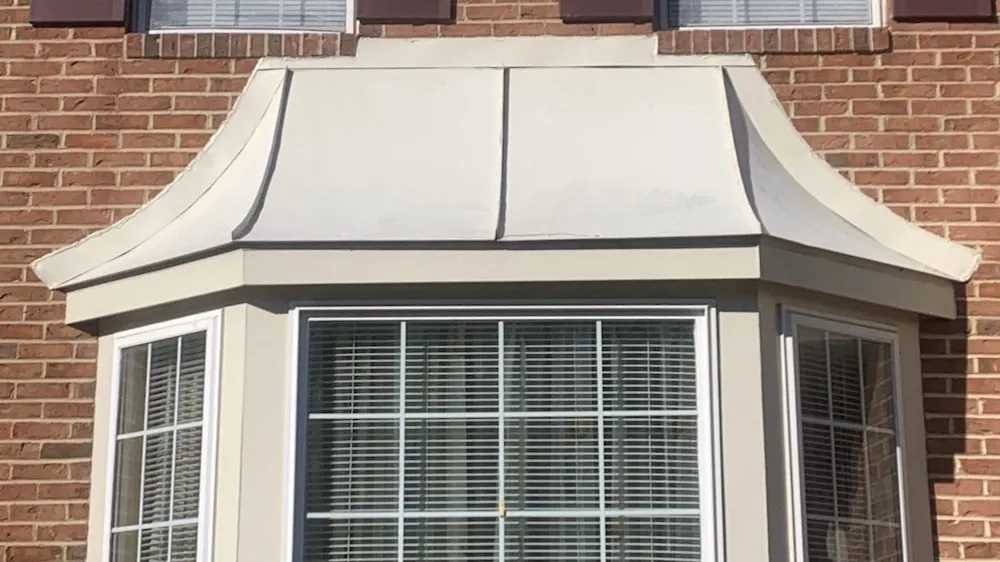
Metal Bay Window
Metal, especially standing seam metal, is a reliable option for bay window roofs. It performs well on smaller roof areas, sheds water effectively, and requires very little maintenance. With a lifespan that can reach 40 years, metal bay window roofs often last through one or more shingle roof replacements, making them a reliable long-term choice.
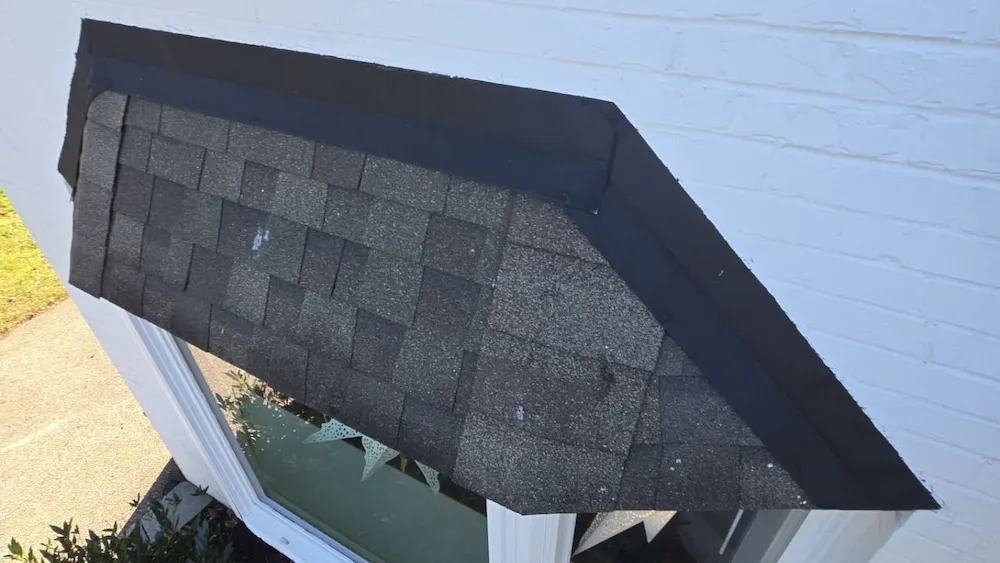
Asphalt Shingles
Many bay window roofs are covered with shingles so they match the primary roof. This is a common builder choice and helps the bay window blend in visually. Shingle roofs can work well, but they tend to need more maintenance over time, particularly at seams and connection points.
Copper
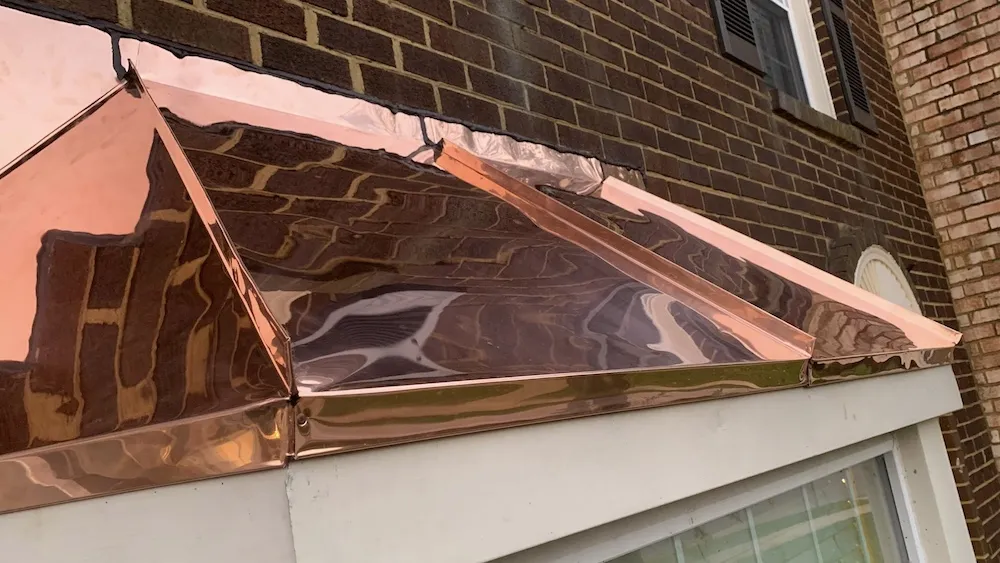
Copper is considered a premium material for bay window roofs. It’s often selected for its long lifespan and the way it ages over time. Copper can last for decades when installed properly, but because of the material and labor involved, it’s typically a planned upgrade instead of a standard choice.
What Triggers A Leak to Become Visible
Bay window roof issues usually show up fairly quickly once there’s a problem. Because these roof sections sit directly above the window and interior wall, leaks tend to appear inside the home rather than staying hidden for long.
Heavy or wind-driven rain is often what brings these issues to light. A bay window roof may seem fine during normal weather, but a strong enough storm can expose weak points that have been there for some time. Issues connected to windows above the bay can also take longer to show up, since water may travel inside the wall before reaching the bay window area.
The key takeaway is that noticing a leak doesn’t automatically mean the bay window roof has failed. In many cases, the issue can be addressed without replacing the entire roof section.
Why Bay Window Roof Issues Need Experienced Experts
Bay window roof leaks are often misdiagnosed. Because water usually shows up around the bay window, it’s easy to assume the roof itself is the problem. In reality, the source of the leak is frequently higher up or coming from an adjoining area, such as flashing, siding, masonry, or a window above the bay.
Experience matters when it comes to tracing where water is actually entering the home. Water does not always follow a straight path, and what you see inside is often not where the problem starts. Knowing how bay window roofs tie into walls, windows, and different exterior materials makes a big difference in identifying the true source of the issue.
This is also why replacing the entire bay window roof is often unnecessary. In many cases, correcting a flashing detail, wall connection, or window-related issue is enough to solve the problem and extend the life of the existing roof. An experienced evaluation helps avoid unnecessary replacement and focuses on fixing what actually needs attention.
Over 20 Years of Bay Window Roof Experience in Maryland
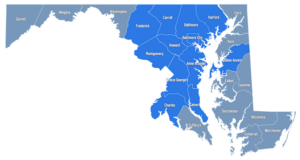
RoofPRO has been serving homeowners across Maryland since 2004, with more than 20 years of hands-on experience working on roofs, windows, siding, gutters, and other exterior home services.
Across our services, our team of certified professionals focuses on understanding how these systems work together, which is critical when diagnosing issues and recommending the right solution.
Over the years, we’ve earned a strong reputation in the community for quality workmanship, honest guidance, and long-term results on both residential and commercial properties. That local experience allows us to approach each project with a clear understanding of Maryland homes, building styles, and weather conditions, so the work is done right the first time.
Get a Free Estimate for Repair or Installation
If you have questions about your bay window roof or are trying to decide whether repair or replacement makes sense, getting a professional opinion can save time and guesswork. A proper inspection helps identify where the issue is coming from and what options make the most sense for your home. Contact us today, our team is ready to provide a free estimate.
Author Bio
Tim Taylor – Owner & Founder of RoofPRO
Tim Taylor began his roofing career in 2003 and founded RoofPRO in 2004 with a mission to fix the poor workmanship that often causes roof leaks. With over 20 years of hands-on experience, he’s earned elite credentials like CertainTeed’s ShingleMaster Wizard certification, HAAG inspection certifications, and OSHA safety training. His expertise in leak repair, flashing repair, and post-storm restoration has made RoofPRO one of Maryland’s most trusted roofing companies. Tim continues to lead with the same principle that built his reputation—roof it right the first time.