

How Long a Roofing Project Usually Takes
Most roof replacements take one to three days. Smaller, simple roofs can often be finished in a day, while larger or steeper roofs usually take longer. The schedule can also stretch if weather moves in, hidden wood damage is found after tear-off, materials are special order, or the permit or inspection timing slows things down.
Step 1: Permit Procurement and Approvals (If Needed)
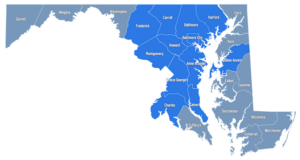
Before the job starts, the permit should be pulled and approved, and HOA rules should be checked if you have them. In Maryland, many roof replacements do not require a permit, but when they do, this step matters because it keeps the work compliant and protects you during resale or inspections. In areas that require it, the permit helps confirm the work meets current code and can be verified by an inspector. HOA approval matters too, because some neighborhoods restrict shingle color and profile, and the wrong choice can lead to fines or a forced change after installation.
Homeowner actions
- Confirm who is pulling the permit and that it’s tied to your address.
- Confirm HOA rules on shingle color and profile before materials are ordered.
Questions to ask
- Will the permit be posted on-site during the job?
- Who schedules the final inspection, and when does that happen?
Step 2: Pre-Construction Staging and Site Protection
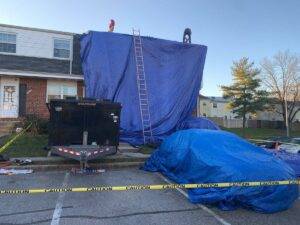 Before tear-off starts, the crew should set the site up for a clean, controlled job. That usually means placing the dumpster in a smart spot, laying tarps or plywood to protect landscaping, and choosing staging zones for when roofing materials get delivered. This step of the roof replacement process is important because it helps prevent property damage and keeps the roof replacement moving without rushed shortcuts later.
Homeowner actions
- Move vehicles out of the driveway so the crew can access the roofline.
- Clear patio furniture, grills, and fragile items near the home.
- Point out sprinklers, landscape lighting, and any hidden utilities.
Step 3: The Tear-Off
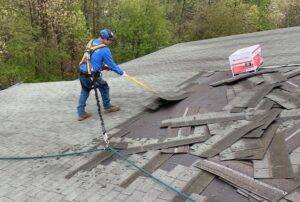 The tear-off involves removing the old roof – the crew will remove shingles and underlayment all the way down to the wood deck, then load the debris into the dumpster. This is the loudest part of the roof replacement process, with the most vibration and the highest risk of small debris around your home. It matters because installing new shingles over old ones can hide problems and shorten the roof’s life.
Homeowner actions
- Expect some dust near attic access areas during tear-off.
- Keep windows closed near the work zone while debris is being removed.
Step 4: Thorough Roof Inspection, including Roof Decking
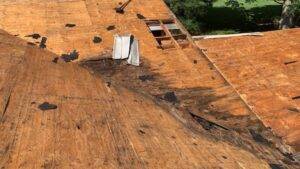 Once the old materials are off, the roofer checks the plywood or OSB for soft spots, rot, and water intrusion, possibly from storm damage. Any compromised sections should be replaced before underlayment and shingles go down. A thorough roof inspection matters because nails need solid wood for holding power. Rotten roof decking can lead to uneven areas, wind issues, and leaks that show up later.
Cost Clarity for Decking Repairs
This replacement is often handled as a change order because it is not always visible until the tear-off is complete. Contractors typically price it by the sheet, plus labor, based on how many sections need to be replaced. Good documentation should include photos of the damaged areas, a count of measured sheets replaced, and your written approval before the extra work moves forward.
Step 5: Drip Edge and Underlayment
The crew then installs drip edge along the eaves and rakes, then lays synthetic underlayment over the entire roof deck. Drip edge matters because it controls water at the roof edge and helps direct it into the gutters instead of behind the fascia. Underlayment is important because it acts as a backup barrier if wind-driven rain gets under the shingles.
Step 6: Reinforcement at Valleys and Penetrations
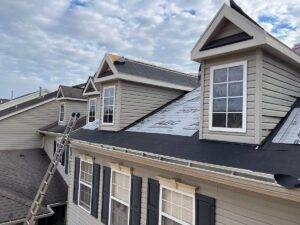 This process focuses on the parts of the roof where leaks are most likely to start. The crew should install ice and water shield in the valleys, then add extra waterproofing around chimneys, skylights, and pipe boots. This matters because most leaks begin at transitions and seams, not in the middle of the shingle field. Valleys also carry concentrated water flow, so they need more protection than the rest of the roof.
Step 7: Main Roofing Material Installation
This is when the new roof starts to take shape. The crew installs a starter strip along the eaves, then lays shingles in the correct pattern with nails placed in the proper nailing zones. Ridge caps go on last to seal and protect the peak. This step matters because the starter strip helps prevent wind lift on the first row, and correct nailing is one of the biggest factors in how long the roof will last.
Homeowner actions
- Confirm the exact shingle line being installed matches what you selected.
Step 8: Ventilation Integration
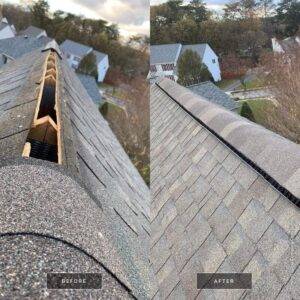 If your roof design allows it, the crew may cut a slot at the ridge and install a ridge vent, then make sure the exhaust and intake ventilation are balanced. They should also confirm bathroom fans vent to the exterior, not into the attic. This step matters because trapped heat and moisture can shorten shingle life. Poor ventilation can also lead to warping and premature aging.
Homeowner actions
- Ask what ventilation changes are being made and why.
- Ask how intake and exhaust will be balanced for your attic.
Step 9: Cleanup and Magnetic Sweep Around Your Home
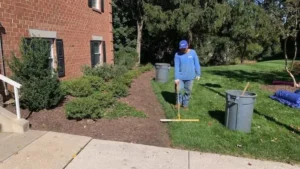 After installation, the crew should remove debris, conduct a magnetic nail sweep across the grass, beds, and driveway then do a final blow-off of the roof and gutters. This step matters because nails are the most common post-job complaint, and cleanup quality usually reflects how disciplined the crew was during the entire process.
Homeowner actions
- Walk the property after cleanup, before you sign off.
- Check driveways, walkways, and pet areas for nails and debris.
Step 10: Final Inspection and Documentation
The job should end with a final walkthrough by the roofing project manager or an inspector, plus a plan to handle any punch-list items. Once everything checks out, you should receive the warranty packet and the key paperwork that closes the replacement project the right way.
What homeowners should receive
- A passed inspection record if your area requires it
- Manufacturer and written workmanship warranty information
- A lien waiver when applicable